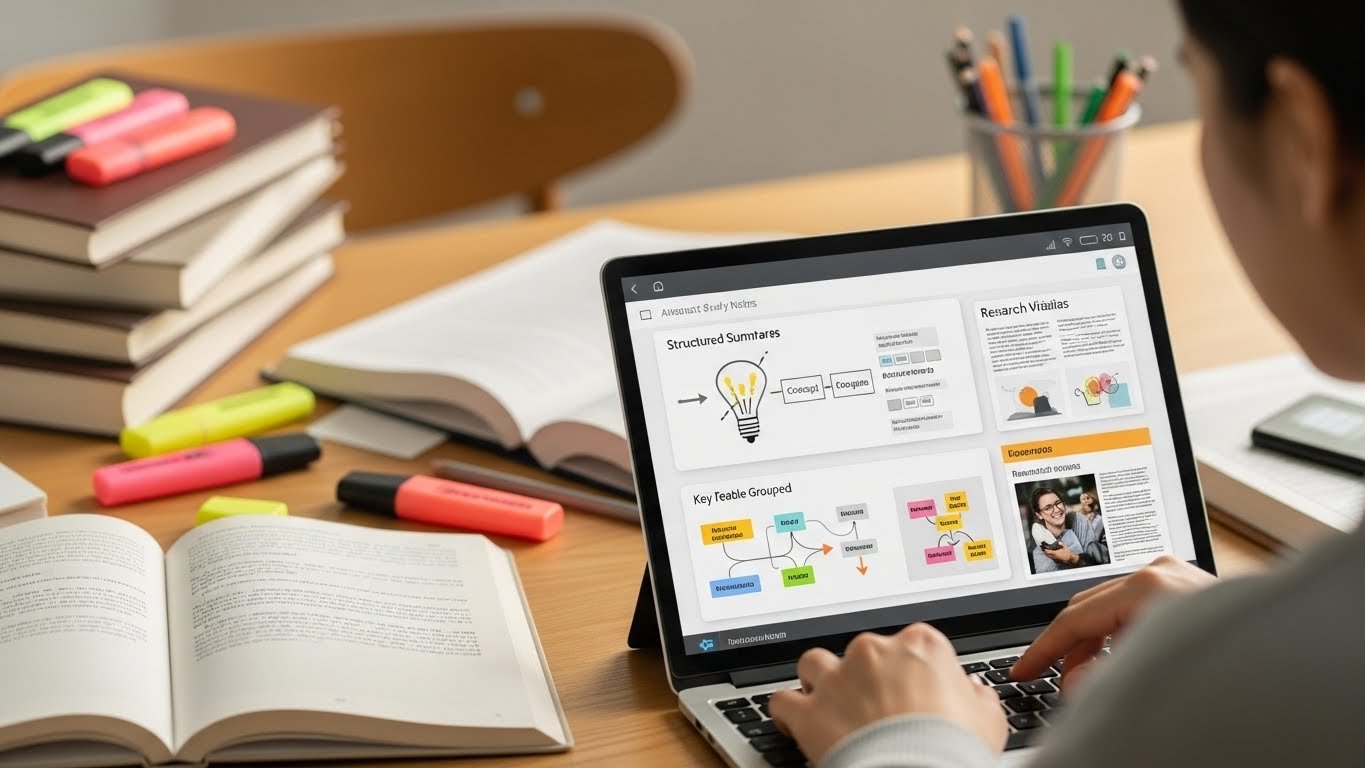

Last October, I spent three evenings a week manning the peer tutoring desk at my university’s science library. Most days, students trickled in with crumpled lab notebooks or dog-eared calculus textbooks, but that month, something shifted. More than half the students sat down, pulled out their phones, and didn’t ask me to solve a problem; they asked me to fix what an AI had already done.
One freshman, Lila, had used a popular AI homework helper to draft her cell biology lab report, and the tool had invented a non-existent control group protocol that her professor called “fundamentally flawed.” She was embarrassed, convinced she’d been caught cheating, but the real issue wasn’t that she used AI; it was that she didn’t know how to use it right.
What Are AI Homework Helper Tools, Really?

Gone are the days when AI for students began and ended with ChatGPT. Today’s specialized tools are built to meet specific study needs, not just generate text. Khanmigo, developed by Khan Academy, is designed to tutor rather than give answers: it will ask guiding questions to help you work through a calculus limit instead of spitting out the final number.
Photomath, once limited to basic algebra, now walks through trig proofs and explains chemistry stoichiometry, with built-in prompts to ask, “Why does this step work?” Perplexity AI, a favorite among humanities students, cites its sources directly, so you can cross-check every fact it generates instead of trusting it blindly.
The Sweet Spot of Responsible Use

I’ve seen this play out dozens of times with my tutees. Take Mia, a sophomore who was failing her calculus weekly quizzes because she couldn’t wrap her head around limit laws. At first, she was using Photomath to plug in problems and copy down answers, but that didn’t help her understand why the answers were right. I suggested she flip the script: first, she would attempt each problem on her own, even if she got stuck halfway.
Over three weeks, her quiz scores jumped from a 52 to an 87. She didn’t just get better at memorizing answers; she learned to identify where her reasoning broke down. That’s the sweet spot of these tools: they’re not meant to do the work for you, but to fill in the gaps when you can’t access an expert right away.
The Pitfalls We Can’t Ignore

For every success story, there’s a cautionary tale. Javi, a junior in my US History discussion section, used ChatGPT to write his entire 5-page essay on the New Deal’s impact on rural farmers. He turned it in confident he’d get an A, but his professor gave him a D because the AI had fabricated a quote from a 1935 Farm Security Administration report that never existed.
The 2024 AAC&U (Association of American Colleges and Universities) report on digital literacy found that 78% of undergraduate programs now have clear AI use guidelines, rather than blanket bans. The best professors aren’t wasting time hunting for AI-generated text; they’re teaching students how to use AI responsibly, framing it as a digital literacy skill rather than a cheating loophole.
Hard Limits of AI Homework Helpers

It’s also important to be honest about what these tools can’t do. Last semester, a senior physics student tried to use ChatGPT to solve a quantum mechanics problem involving time-dependent perturbation theory. The AI gave a step-by-step solution that looked convincing, but it completely misapplied the Dyson series formula.
For advanced, niche subjects, there’s no replacement for talking to an expert. AI can’t pick up on your unique learning gaps or explain a concept in the specific way that clicks for you, the way a professor or tutor can.
Quick Best Practices for Students
- Always attempt the work first before turning to AI.
- Cross-check every fact, formula, or quote generated by AI with a trusted source.
- Follow your professor’s guidelines, and disclose AI use if required.
- Pick the right tool for the job: use Khanmigo for STEM tutoring, not ChatGPT.
FAQs
Q: Is using AI homework helpers considered cheating?
A: It depends on how you use it. Copying AI-generated work verbatim without disclosure is almost always cheating, but using it to tutor yourself or edit your work is usually allowed if you follow your professor’s guidelines.
Q: Which AI homework helper is best for STEM subjects?
A: Khanmigo and Photomath are top picks for step-by-step STEM tutoring, as they’re aligned with standard curricula and avoid making up facts.
Q: How can I make sure AI-generated information is accurate?
A: Always cross-check with a trusted source, like a textbook, peer-reviewed article, or your professor. Tools like Perplexity AI cite their sources to make this easier.
Q: Should I tell my professor I used AI?
A: If your professor has a disclosure policy, yes. Even if they don’t, being transparent can help avoid misunderstandings.
Q: Can AI homework helpers replace tutors or professors?
A: No. AI can fill in gaps when you can’t access an expert, but it can’t provide personalized feedback on your unique learning gaps or explain niche, advanced concepts.

Related Posts