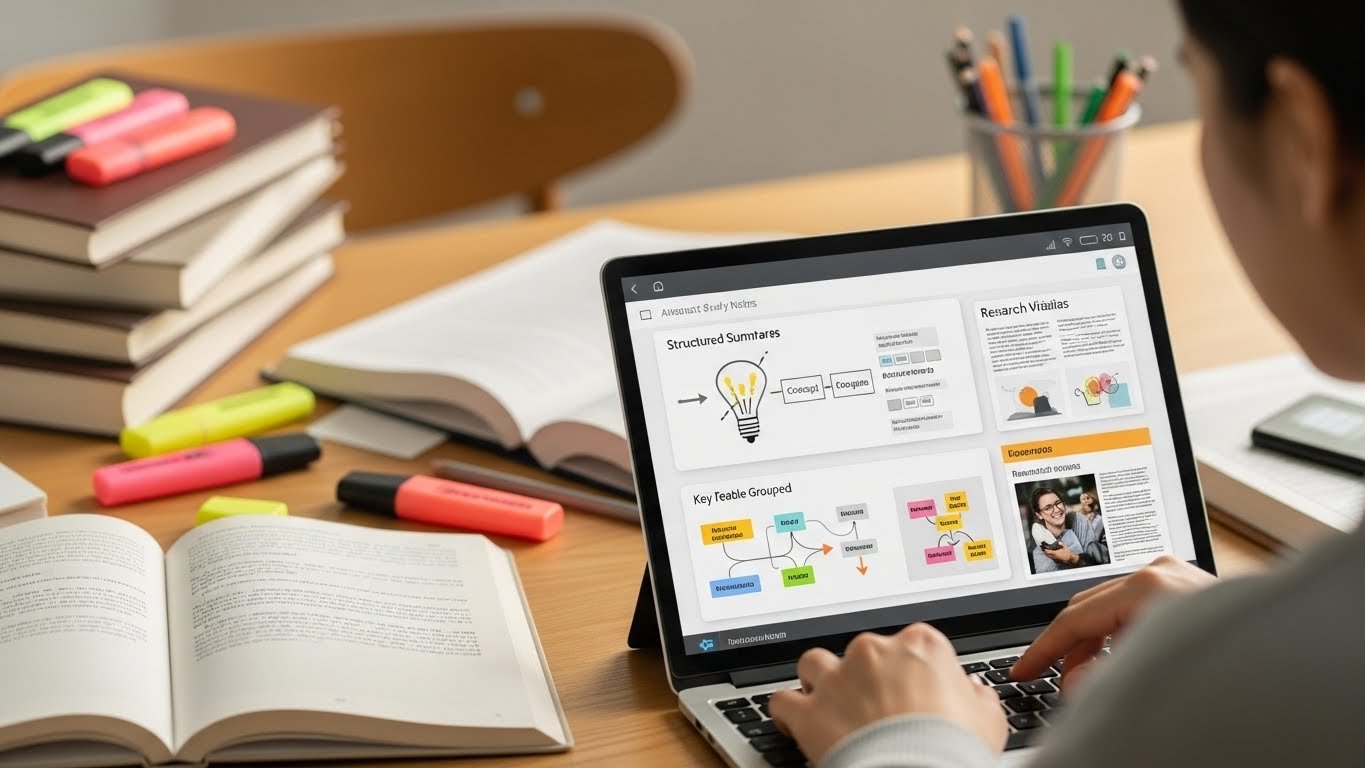

Let’s be honest. The term “AI in education” has been talked about for years, often bringing to mind images of robotic tutors or a future where teachers are replaced. Having spent the last decade designing and teaching online courses, I’ve seen this hype cycle over and over. For a long time, AI in education seemed more like a buzzword than a practical tool. But recently, things have started to change. The latest AI learning tools aren’t about replacing te achersthey’re about enhancing their work.
They function as smart teaching assistants, dedicated practice partners, and personalized feedback providers, giving students and instructors the support we’ve long wanted. What once felt like science fiction is now becoming reality. These tools are reshaping online education by making learning more interactive, responsive, and tailored to individual needs. AI is no longer just a concept; it’s a practical toolkit that genuinely improves the everyday experience of teaching and learning.
From Static Pages to Dynamic Pathways

Remember the early days of online learning? It was often a glorified digital textbook: static pages, a multiple-choice quiz, and a lonely discussion forum. The biggest challenge was the one-size-fits-all approach and the agonizing wait for personalized feedback. Enter the new wave of AI tools.
Take adaptive learning platforms, for instance. I’ve integrated tools like Knewton Alta or Smart Sparrow into my curriculum, and the difference is palpable. Instead of every student marching through Module 1, then 2, then 3, the platform constantly assesses performance. If a learner stumbles on a core concept like statistical correlation, the system doesn’t just mark it wrong.
It recognizes the knowledge gap, serves up a micro-lesson with a different explanation (maybe a video instead of text), and provides three new practice problems before allowing them to move on. It creates a unique learning pathway for each individual. This is the antithesis of the robotic, assembly-line model; it’s responsive and deeply human in its goal of meeting the student where they are.
The 24/7 Socratic Tutor: Beyond the Chatbot

Then there’s the conversational AI, like Khanmigo or integrated tools within LMS platforms like Canvas. The leap from the clunky, frustrating chatbots of five years ago is staggering. These aren’t just FAQ responders. I’ve seen students use them as Socratic tutors. A student working on an essay about the causes of the French Revolution can ask the AI.
Can you quiz me on the economic factors until I’m confident? or “Play devil’s advocate against my thesis statement.” It provides a safe, pressure-free space for dialogue that’s impossible for a single instructor to replicate with hundreds of students at all hours. A real case study from one of my writing seminars: A notoriously shy, non-native English speaker began privately using an AI writing coach.
like Grammarly’s generative AI features or Jenni.ai to draft and refine his discussion posts. The tool didn’t write for him; it suggested structural improvements and offered phrasing alternatives. His confidence grew, and he began participating more in live sessions. The AI acted as a bridge, not a crutch.
The Educator’s New Co-Pilot

This is the crucial point often missed: the most powerful AI tools are those that empower the instructor. My workflow has been transformed by tools like Gradescope for rapid, consistent grading of problem sets, and Otter.ai for transcribing live seminar discussions. After a session, I can instantly share a searchable transcript, highlighting key moments where a debate ignited.
I can use an AI lesson planner to generate creative activity ideas for a tough topic, which I then adapt with my expertise. Perhaps the most significant shift is in assessment design. With AI’s ability to generate text, the old “write a 500-word essay on…” prompt is dead. It’s an ethical and practical necessity to evolve.
Now, my assignments are more applied: “Using this AI-generated (and factually flawed) essay on climate policy, critique its arguments, identify its logical fallacies, and use our course materials to correct it.” This teaches critical analysis, a skill far more valuable than regurgitation.
The Inescapable Caveats & Ethical Ground Rules

This isn’t a utopian vision. The pitfalls are real and require vigilant navigation.
- The Bias Problem: AI models are trained on existing data, which contains human biases. An AI history tutor might overlook or minimize non-Western perspectives if not carefully guided. We must audit tools for these biases and teach students to be aware of them.
- The Over-Reliance Trap: The goal is learning, not efficiency. If a student uses an AI to solve every math problem without understanding the steps, they’ve learned nothing. I now have explicit “AI Use Policies” in my syllabus, specifying when it’s a permitted aid and when it constitutes bypassing the learning objective.
- The Human Connection Imperative: AI cannot provide empathy, true mentorship, or spark a passion for a subject. The most effective online courses I’ve seen use AI to handle the repetitive, scalable tasks, freeing up the human instructor for high-touch interactions: office hours, nuanced feedback on final projects, and fostering community.
The Road Ahead
We’re in the early, messy, and incredibly promising chapters of this story. The future of online education isn’t a student alone with a robot. It’s a dynamic ecosystem where AI handles personalized practice and administrative heavy lifting, while human educators focus on inspiration, complex mentorship, and cultivating the soft skills that define our humanity.
The best tool is the one you don’t even notice, it just makes the learning journey smoother, more engaging, and more attuned to the individual in front of the screen. Our job is to wield these tools with intention, ethics, and a clear, unwavering focus on the human being at the heart of it all.
FAQs
Q: Won’t AI just do the work for students, leading to cheating?
A: It can, if used passively. That’s why educators are redesigning assessments to be process-oriented (e.g., “analyze and improve this AI output”) and setting clear ethical guidelines, shifting the focus from product to critical thinking.
Q: Are these AI tools expensive for schools?
A: It varies. Many LMS platforms are building basic AI features (feedback bots, analytics) into existing subscriptions. Standalone adaptive platforms can be a significant investment, often justified by improved student outcomes and retention.
Q: How can I, as an online student, use AI tools ethically?
A: Use them as a tutor, not a ghostwriter. Ask an AI to explain a concept you don’t understand, quiz you, or brainstorm ideas. Always cite your use if required, and never submit AI-generated text as your own original work.
Q: Do instructors know if I’m using AI?
A: AI detection tools are unreliable and often generate false positives. The more significant shift is that instructors are crafting assignments where using AI transparently is part of the learning process, making detection less relevant than proper engagement.
Q: What’s the single biggest benefit of AI in online learning?
A: Scalable Personalization. For the first time, we can realistically offer a form of one-on-one, immediate support and tailored learning paths to every student in a massive online course, breaking the static page model.

Related Posts