Baked Miso Salmon
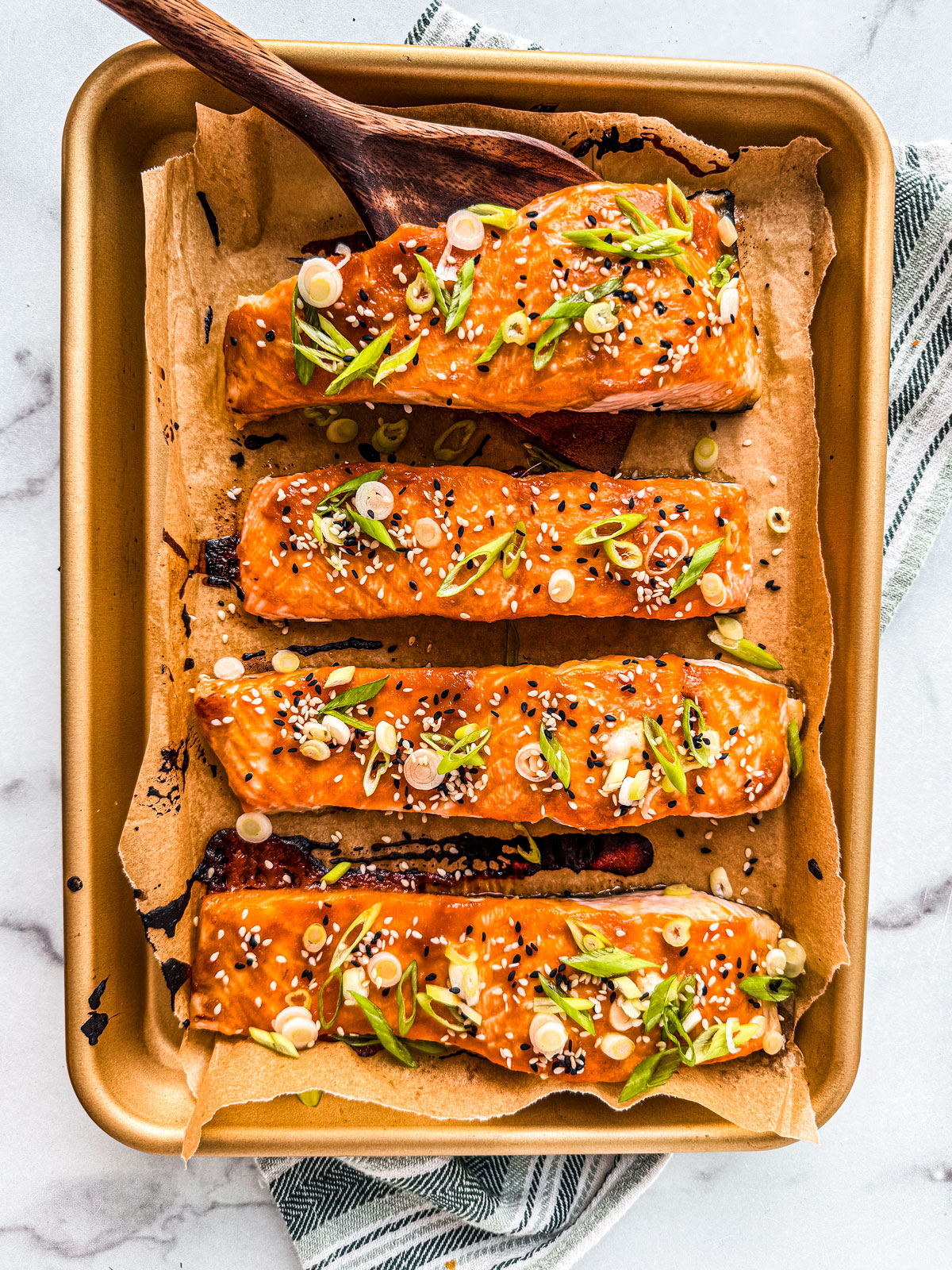
If you’re looking to add more fish to your meals, this is the perfect place to start. This baked miso salmon is made with only 7 ingredients and takes just 20 minutes to prepare. Despite the simplicity, it’s buttery, flaky, and incredibly flavorful. A quick and satisfying option for weeknights.
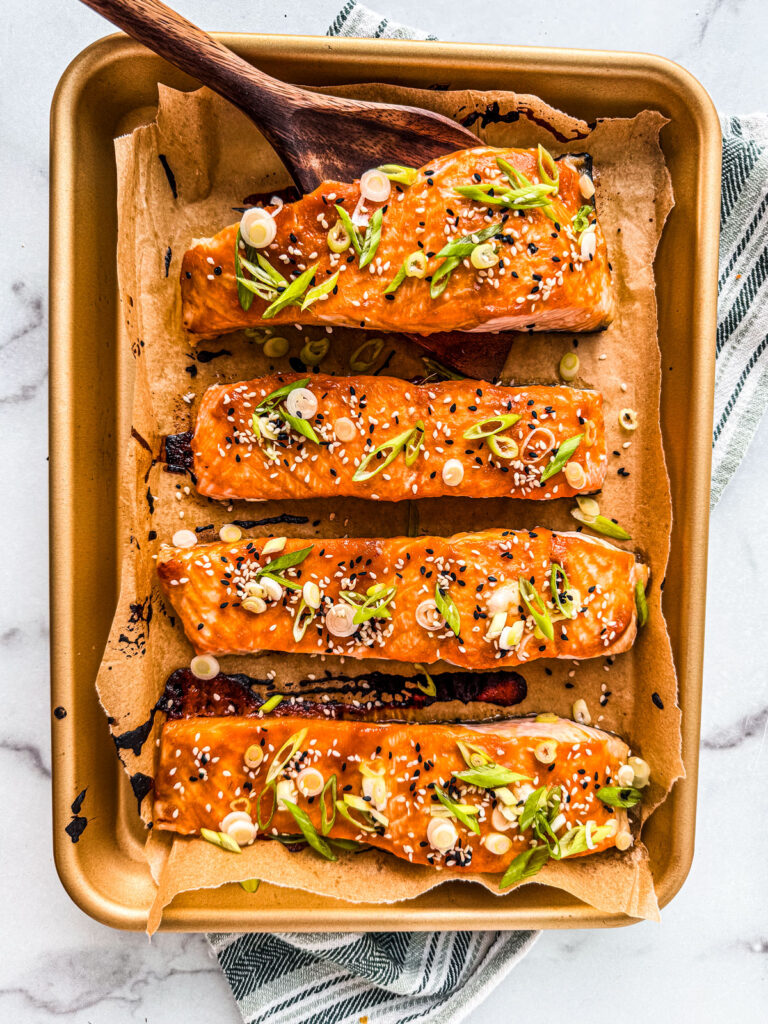
We eat salmon at least once a week around here, and more often than not, it’s this easy baked miso salmon. It’s quick, simple, deeply flavorful, and quietly nourishing—the kind of recipe you lean on again and again.
Why You’ll Love This
- Big flavor, small ingredient list
- Quick and perfect for weeknights
- It’s nutritious—salmon delivers omega-3s while fermented miso supports gut health. Both bring a solid dose of essential vitamins and minerals to the table.
Ingredient Overview
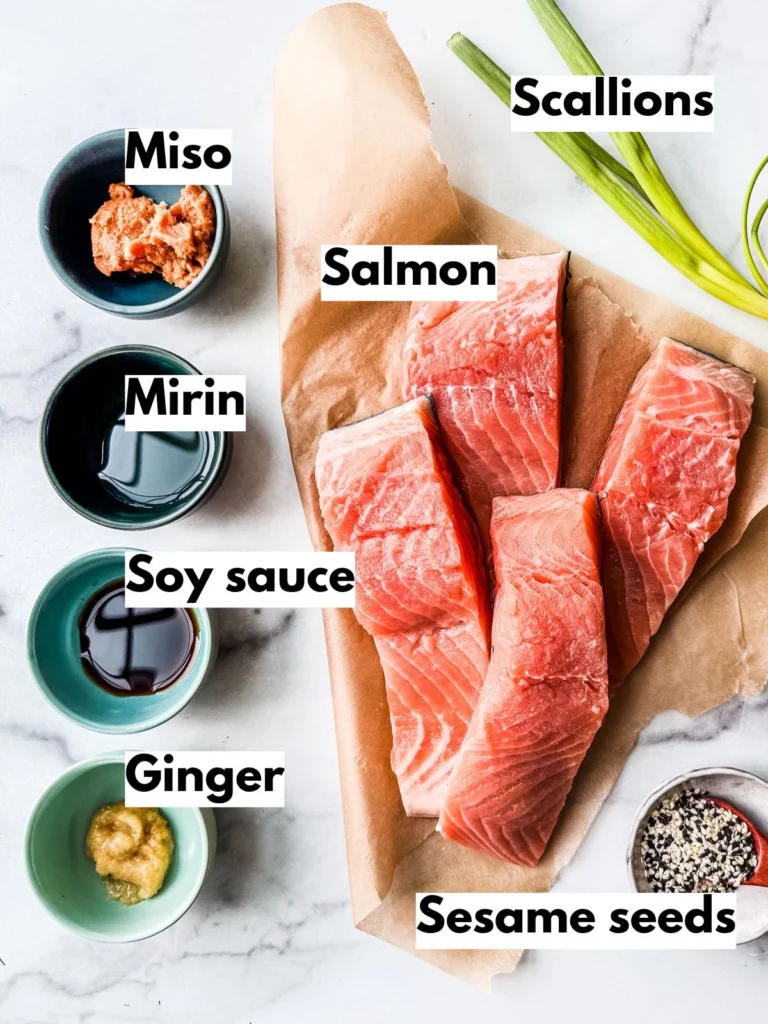
A quick look at the essentials before we dive into the recipe card:
- Salmon: I’m firmly in the camp of rich, fatty Atlantic salmon—often labeled Chinook, King, or Faroe Islands at the fish counter. It’s buttery, flakes beautifully, and delivers the best texture here. Skin on or off is up to you, but we always keep it—it’s nutrient-dense and gets nicely crisp.
- Miso paste: There are a few types to choose from, but this recipe uses shiro (white) miso. It’s mild, slightly sweet, and ideal for glazing salmon without overpowering it.
How to Make Baked Miso Salmon
Step 1: Prep the Salmon
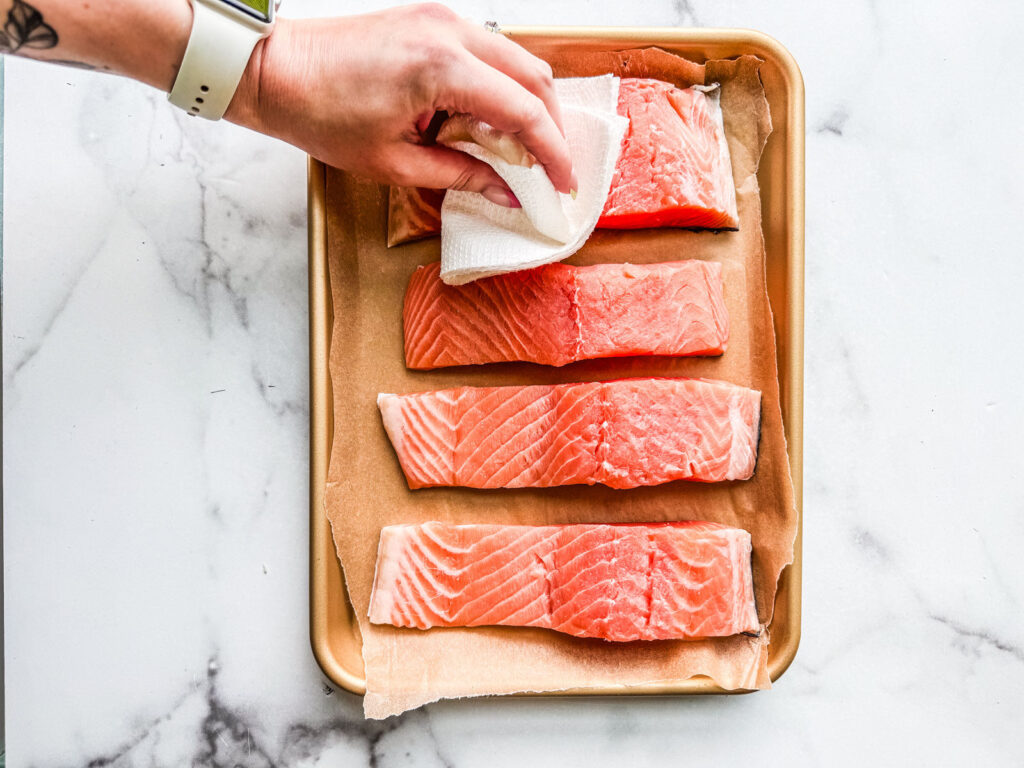
Preheat the oven to 425ºF, then line a baking sheet with parchment paper.
Place the salmon fillets on top, then lightly pat the fillets with paper towels to get rid of any excess moisture. Sprinkle a little bit of salt over the fillets.
Pro Tip
Let the fillets sit out at room temperature for 15 minutes prior to cooking. This will ensure you get an even cook.
Step 2: Make the Miso Glaze
Whisk all of the ingredients for the miso glaze in a small bowl until it’s well mixed and a paste forms. Add a bit of water, about a tablespoon, and mix it again until it becomes more of a smooth sauce.
With a pastry brush, brush a generous amount of the miso glaze over the fillets.
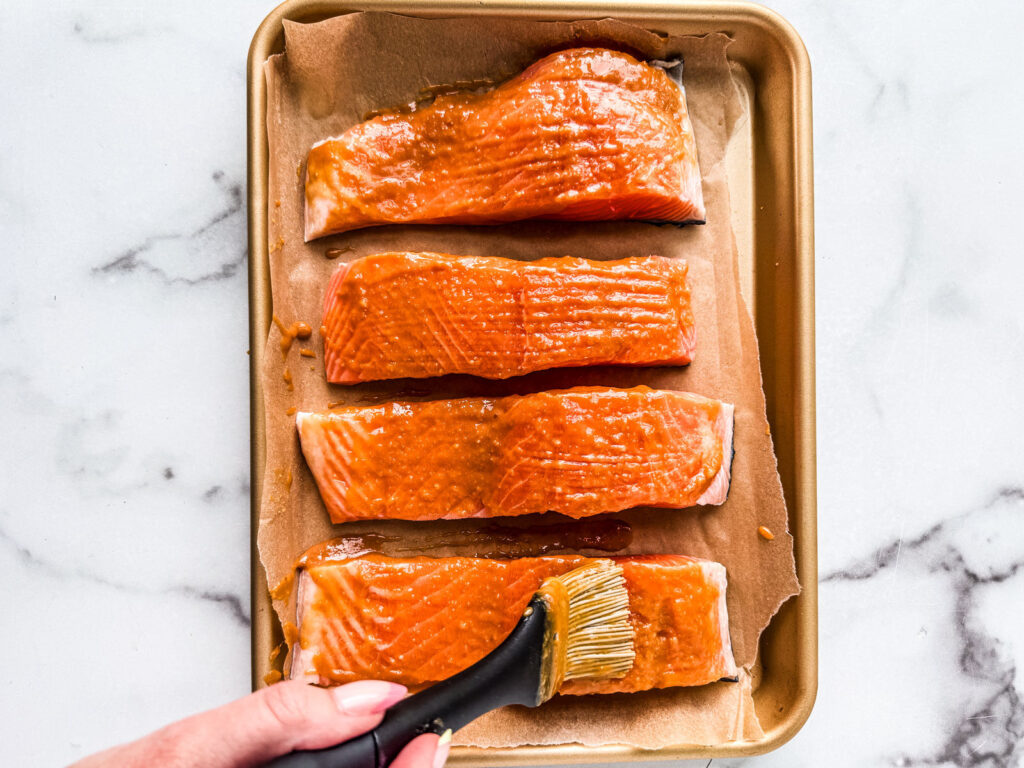
Step 3: Time to Bake!
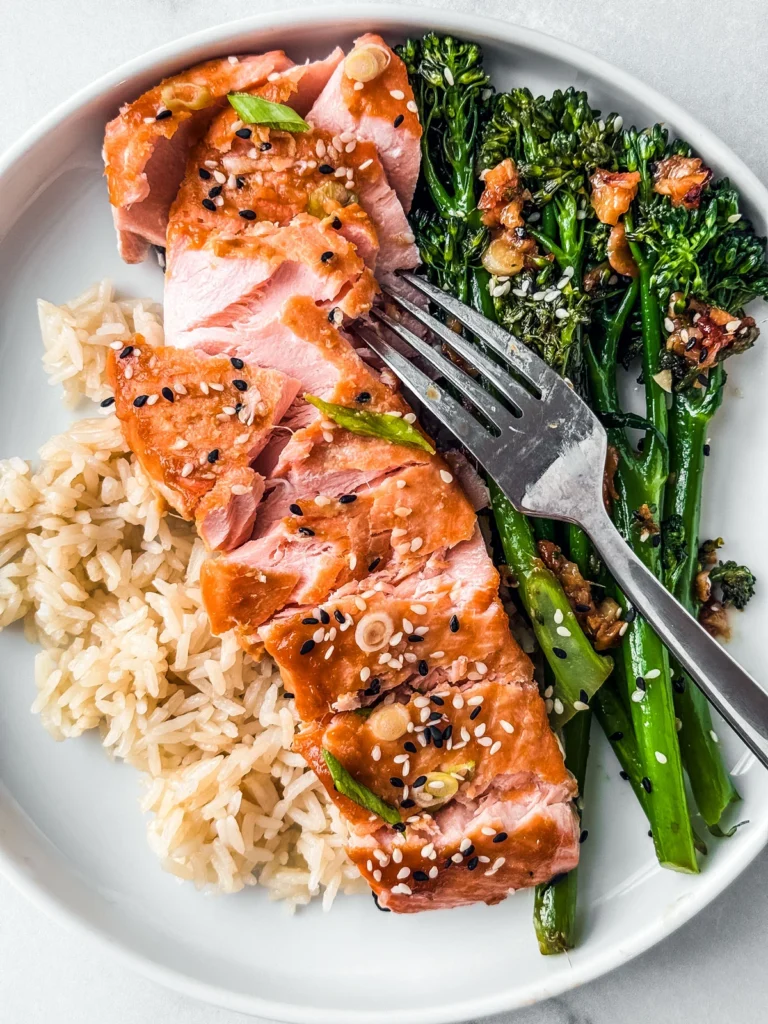
Pop the fillets into the oven and bake for about 8-12 minutes (depending on thickness), or until the fillets reach an internal temperature of 140-145º F—between medium and over-medium. Perfect doneness!
Substitutions & Variations
- If you can’t find mirin, you could use rice vinegar, sake, or dry sherry.
- Substitute brown miso for white miso if necessary.
Storage & Reheating
- Fridge: Store leftover salmon in an airtight container in the fridge for up to 4 days.
- Reheat: Heat the salmon in the microwave in 25-second increments until it’s warmed through.
Frequently Asked Questions
Can I marinate the salmon in the miso paste?
You could toss the salmon into the miso paste and let it sit while you prepare your sides, but I wouldn’t marinate the salmon in the miso. Miso is very salty, and salmon is incredibly delicate.
How can I tell if my salmon is done?
I always rely on a meat thermometer and remove the salmon from its heat source once it reaches an internal temperature of 135-140ºF. Otherwise, you’re looking for the salmon to be opaque and easily flake with a fork.
Why is my salmon dry?
Dry salmon is due to overcooking and, although it’s still edible, can be much less enjoyable. This is why I highly recommend getting yourself a meat thermometer to watch internal temperatures closely.
Storage & Reheating
To keep leftover salmon fresh, store it in an airtight container where it will last up to 3 days.
For reheating, place the salmon on a microwave-safe plate and microwave it in 25-second intervals until it’s fully warmed. Alternatively, if you have an air fryer, you can reheat the salmon at 375º F for 2-4 minutes, or until heated through.



Post Comment