
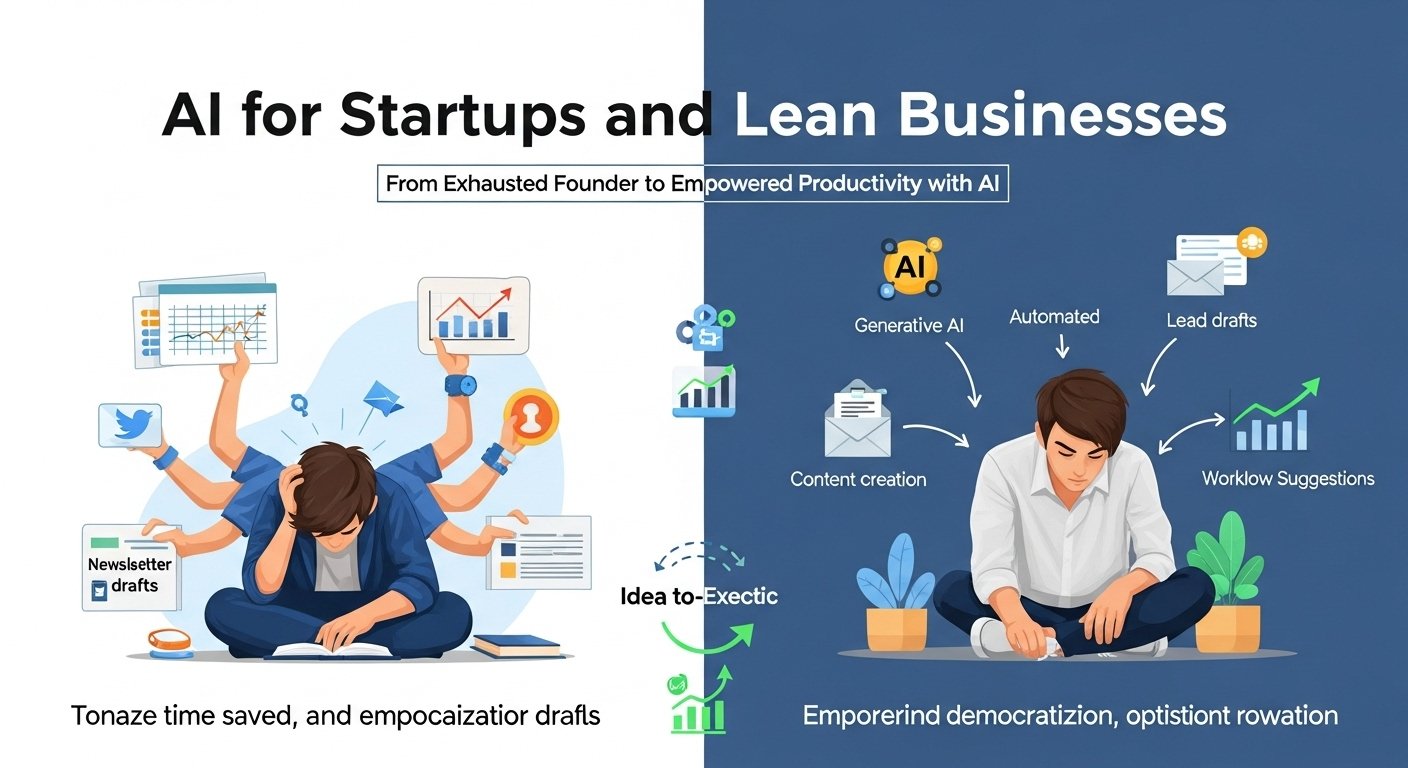
There is a specific kind of exhaustion that comes with launching a startup in the post-pandemic era. I’ve been there. You’re the founder, the CEO, the janitor, and the customer support rep all rolled into one. You are staring at a spreadsheet that looks like a ransom note, trying to cold email potential leads, and drafting your monthly newsletter on a Tuesday at 9:00 PM. Ten years ago, if you wanted to compete with Amazon or Salesforce, you needed a massive budget. Today, the landscape has shifted.
The biggest secret in the tech world right now isn’t a new coding language or a complex machine learning algorithm; it’s accessibility. The rise of accessible Generative AI has effectively blown up the economic barrier to entry. You just need a great idea and the right tools in your stack. If you’re running a lean operation or just sitting on an idea for a side hustle, here is how you can actually use modern AI tools to stop spinning your wheels and start building.
1. The Copywriter’s Doppelgänger
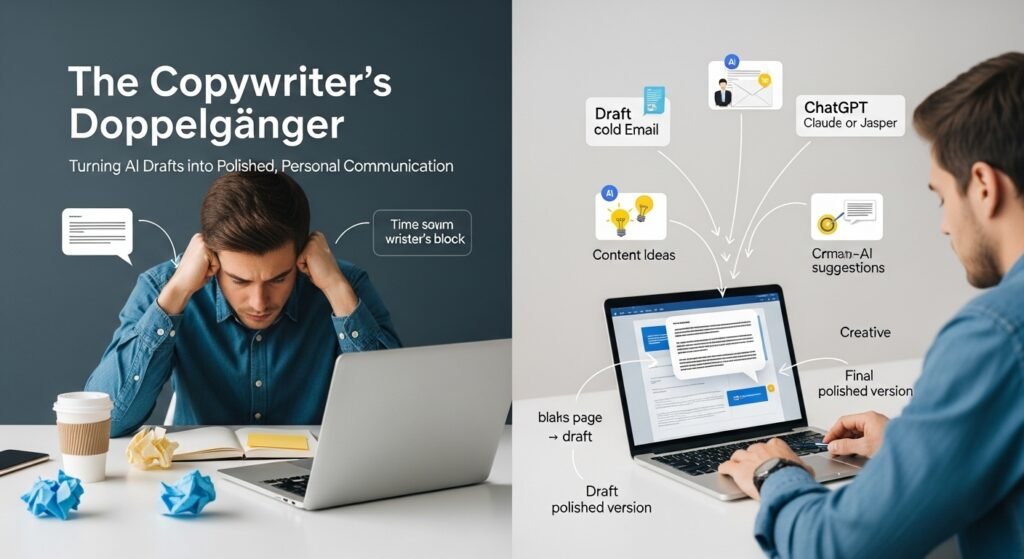
For most solopreneurs, the hardest part isn’t the product; it’s the marketing. I remember years ago, I spent an entire Saturday trying to write an “About Us” page that sounded professional but not corporate. It’s exhausting. This is where tools like ChatGPT, Claude, or Jasper come in. They aren’t just shiny toys; they are productivity engines. You don’t use them to write your entire strategy and then hit publish. That usually results in robotic, generic content.
Instead, use them as a brainstorming partner. Imagine you need to send a cold email to a potential investor or a hiring manager. Instead of staring at a blank screen, you can ask an AI tool: “Write a cold email to a SaaS founder asking for 15 minutes of advice. Keep it casual, professional, and mention they recently had a 50% growth quarter.”It gives you a draft. You then review it, tweak the tone to fit your actual personality, and send it. It saves hours of staring at cursors.
2. Customer Support That Doesn’t Sleep
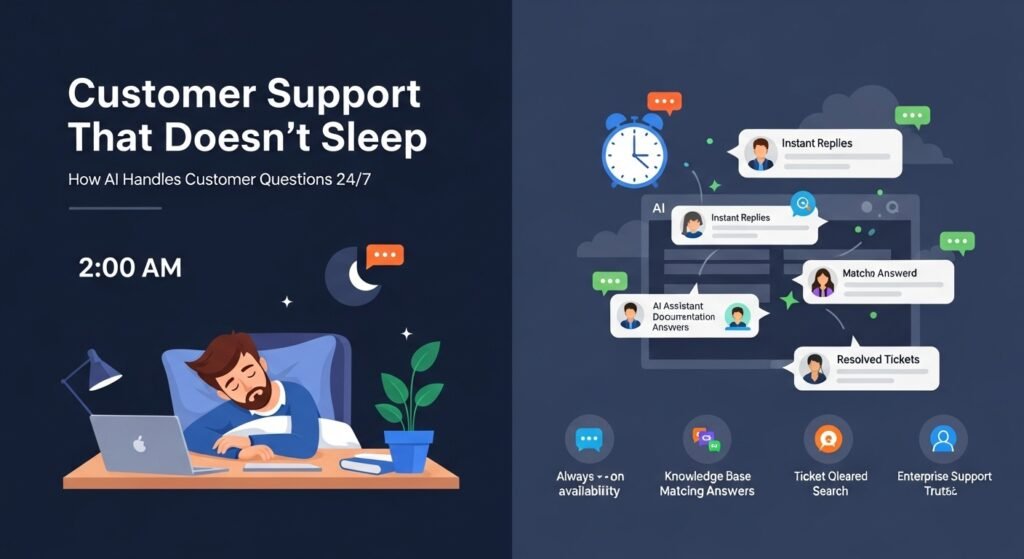
One of the biggest milestones for a startup is scalability, but before you can scale, you have to survive the early churn. If you have three customers and three support emails, you can handle it. But if you get 20 overnight, burnout is imminent. This is where AI-driven support platforms like Intercom (specifically their “Fin” product) or Salesforce Service Cloud Einstein are game changers.
These tools use vector databases to search through your existing documentation and knowledge base to answer customer queries instantly. If a user asks about your refund policy at 2:00 AM on a Sunday, the AI answers it right then. By the time you wake up, your ticket queue is clear, and your customer feels heard. It’s like having a support agent who never sleeps and has read every single line of your documentation.
3. Coding With a Sidekick
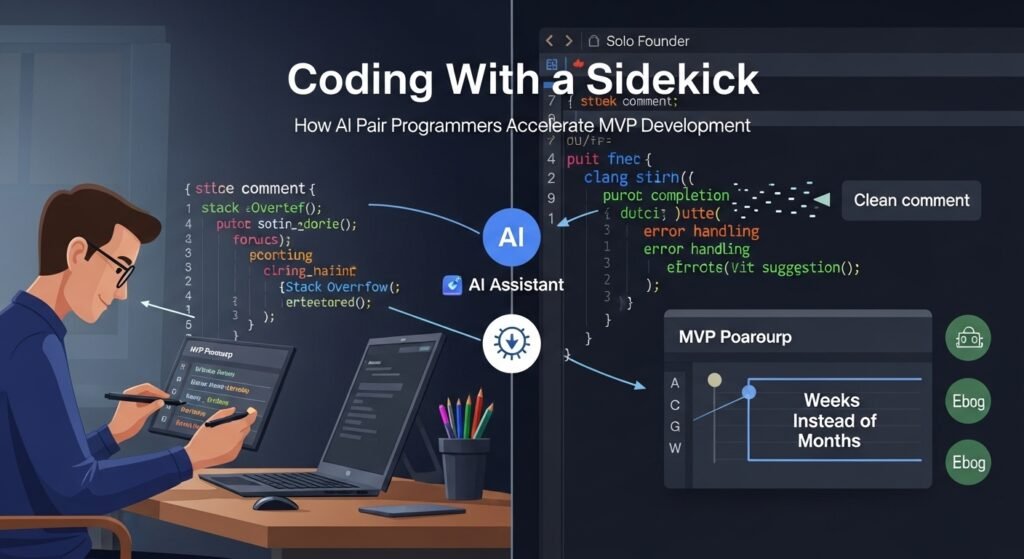
If you are building a web app, you are likely either coding it yourself or managing a small dev team. For a long time, I relied heavily on Stack Overflow to debug my JavaScript. It was a blessing and a curse; sometimes the answers were outdated or cryptic. Today, GitHub Copilot is a different beast. It’s an AI pair programmer. You type a comment, like // Create a function to fetch user data from the API and handle errors, and it auto-completes the code.
Is it cheating? Some might say so. In reality, it’s more like having a senior developer looking over your shoulder who knows the syntax of every language by heart. It allows solo founders to build functional MVPs (Minimum Viable Products) in weeks rather than months. Just remember, you still need to understand the code to debug it; AI won’t rewrite your entire architecture for you, but it will cut your grunt work significantly.
4. The Meeting Wrap-Up
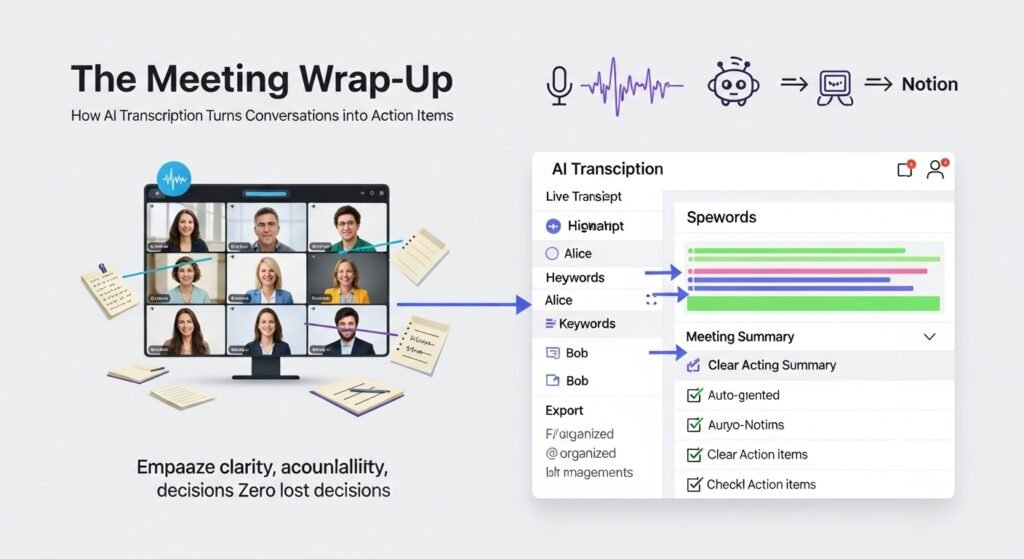
There is a saying in corporate life: If it wasn’t documented, it didn’t happen. But who actually documents everything? We all attend Zoom calls, half-listen to the details, and then immediately forget what was decided. AI transcription tools like Otter.ai and Fireflies.ai solve this elegantly. When you start a call, you simply invite the bot. It listens, it transcribes, and it highlights keywords.
It even differentiates between different speakers. At the end of the call, it generates a summary: “Meeting recap: Alice mentioned the launch date is delayed by two weeks. Bob agreed to update the landing page.”You can export these transcripts to Notion or your project management software. It captures action items that would otherwise get lost in the noise of a 30-minute sync.
5. Data Crunching Without the PhD

Startups are all about data, but 90% of founders are terrible at data analysis. If you have a CSV of your sales data from the last year, do you know which marketing channel actually made you money?AI tools can now analyze these spreadsheets for you. You can paste a raw dataset into a tool like ChatGPT (with the advanced data analysis features) and ask: “Which of these customer segments spent the most money in Q3, and why?”
It cleans the data, identifies trends, and gives you a narrative. It democratizes data science. You don’t need to hire a data analyst to tell you that your weekend email campaign performed 15% better than your Tuesday newsletter. You just need to ask the right question.
The Reality Check: Trust and Ethics
As an expert in this space, I feel obligated to offer a dose of reality. While these tools are powerful, they are not infallible. AI hallucinations, where the AI confidently presents a false fact as truth, are still very real. If you are using AI to write legal contracts or medical advice, you are playing with fire.
Always, always review the work. These tools require a human in the loop to verify the output. Furthermore, consider privacy. If you upload sensitive proprietary company data into a public AI model, you have to ask yourself: Is that information now training the model for the next guy?
The Bottom Line
The tools for entrepreneurs in 2024 are incredible, but they are simply the lever. You still have to have the strength to lift the rock. AI won’t build your product for you, and it won’t make you charismatic or visionary. However, if you use these AI tools to automate the drudgery of writing, coding, transcribing, and support, then you free up the most valuable resource you have: your time.
FAQs
Q: Is it ethical to use AI to generate customer support responses?
A: Generally, yes, as long as you are transparent. If you are using an AI bot, it is standard practice to label it as such so the customer knows they are chatting with an automated system. Transparency builds trust.
Q: Can AI tools replace a founder entirely?
A: No. While AI can handle copy, code, and data, it cannot make the high-stakes strategic decisions, handle the emotional rollercoaster of leadership, or understand the nuances of personal relationships with clients. It is a force multiplier, not a replacement.
Q: Which AI tool is best for complete beginners in business?
A: Start with ChatGPT or Claude. They are versatile. You can use them for brainstorming business names, drafting emails, summarizing documents, and coding snippets. They are the Swiss Army knives of the startup world.
Q: Are these AI tools expensive?
A: It varies. Many basic tools offer free tiers that are perfect for early-stage startups. As your company grows, premium tiers often offer better security features and volume limits, but the entry cost is usually very low, which is great for bootstrapping.
Q: How do I stay safe with my data when using AI tools?
A: Always check the privacy policy of the tool. If your data is proprietary, ensure the AI provider has a data retention policy that deletes your inputs after use. Avoid inputting highly confidential, trademarked, or Personally Identifiable Information (PII) into public chatbots unless necessary.

Related Posts