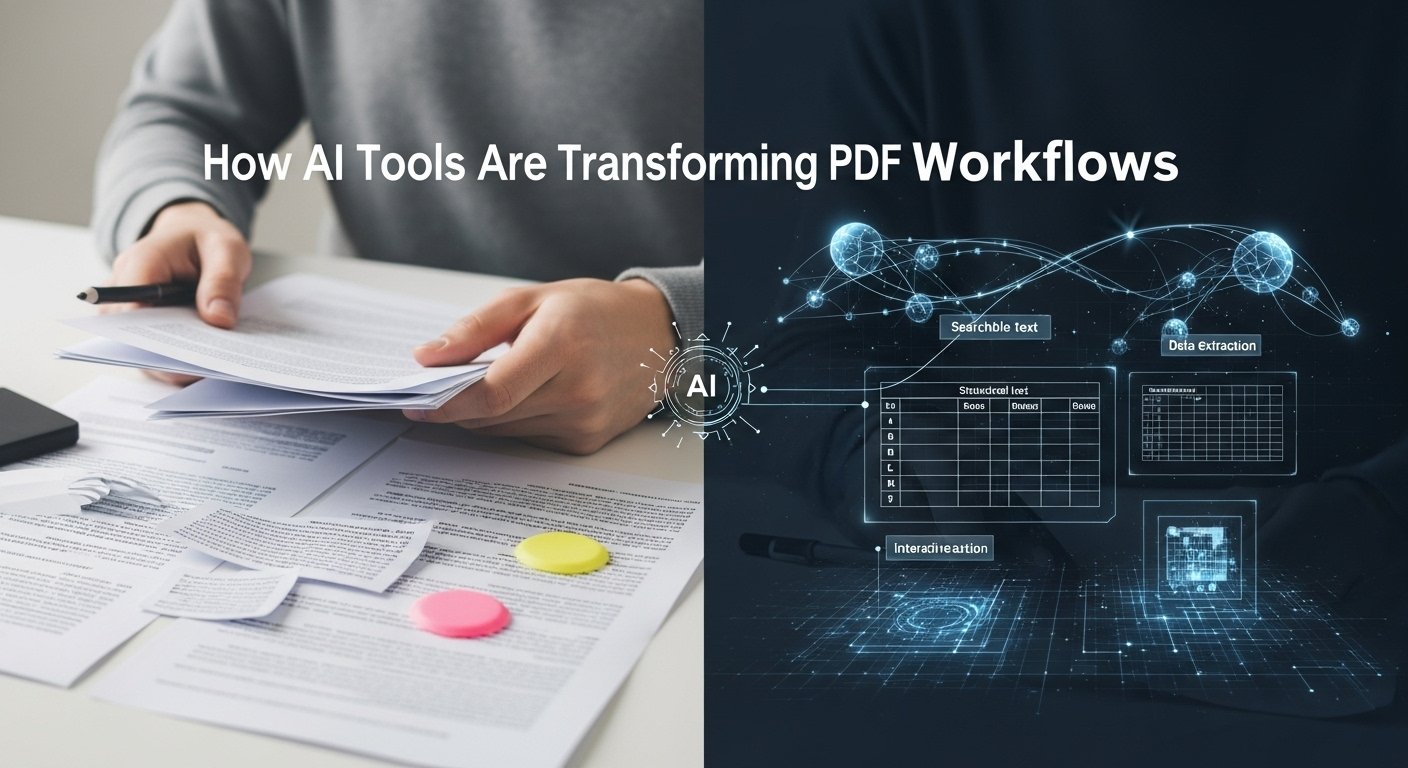
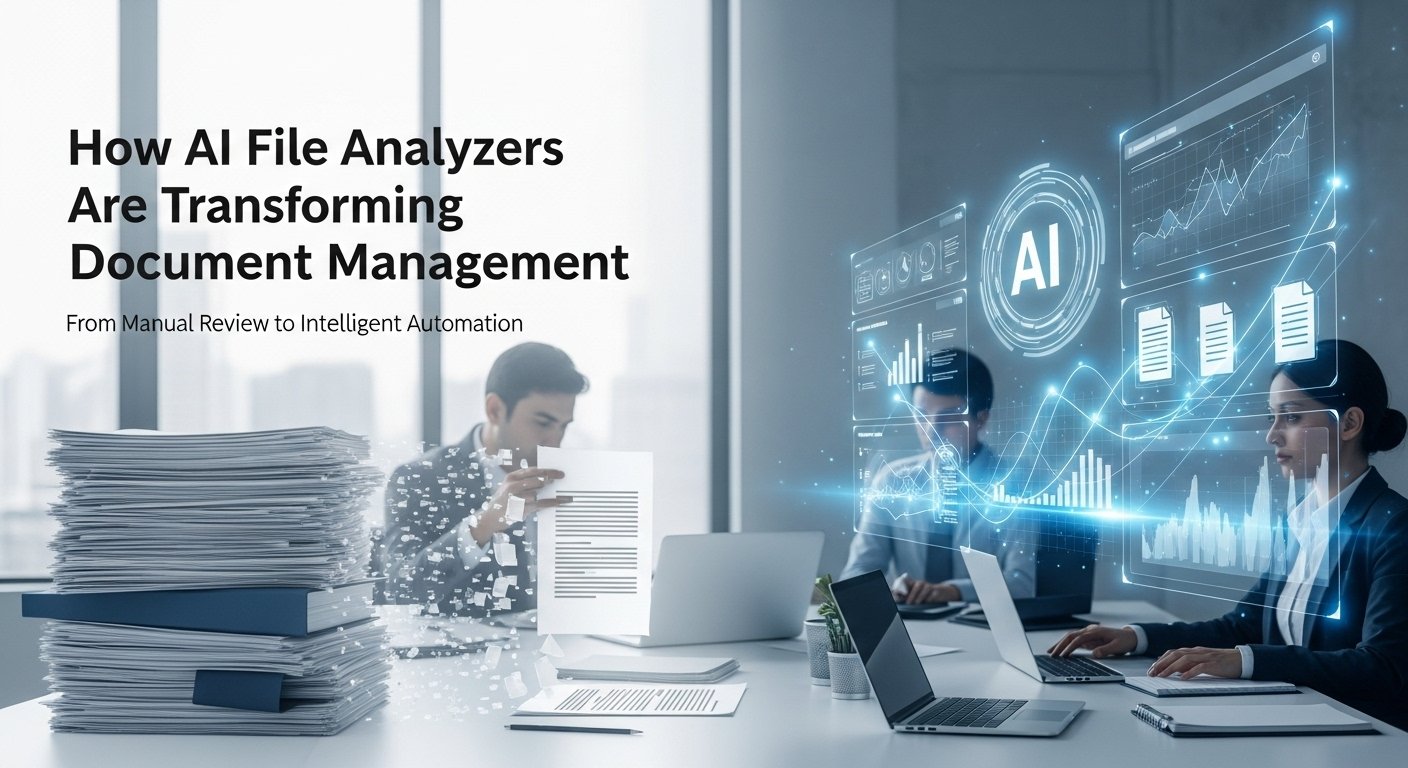
After spending the better part of a decade working with enterprise document management systems, I’ve witnessed firsthand the shift from tedious manual file processing to sophisticated AI-powered document analysis. This change hasn’t been subtle it has fundamentally reshaped how organizations cope with overwhelming volumes of information. Processes that once relied heavily on human review, manual tagging, and endless searching are now handled with speed and precision.
Last month, while consulting for a mid-sized law firm buried under discovery documents, we implemented an AI file analyzer that processed 47,000 files in just three hours. To put that into perspective, the same workload would have taken their paralegal team nearly six weeks. But the real impact went far beyond raw speed. What truly matters is how these tools improve accuracy, reduce burnout, and allow professionals to focus on higher-value work rather than drowning in documents.
What Makes AI File Analyzers Different
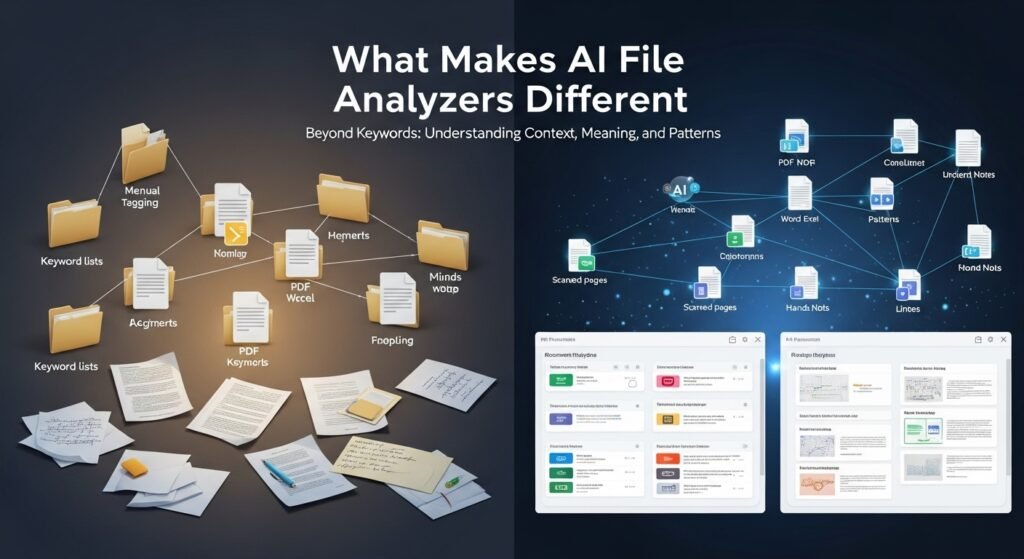
Traditional document management relied heavily on manual tagging, folder structures, and keyword searches that often missed context entirely. Modern AI file analyzers operate on an entirely different level. They don’t just read text; they understand relationships, extract meaning, and identify patterns humans might never notice.
Think of it like having a tireless assistant who not only reads every document but remembers every detail, understands context across thousands of files, and can instantly recall any piece of information while understanding how it relates to everything else. During a recent audit project, our analyzer flagged contract inconsistencies across vendor agreements that human reviewers had missed for years, potentially saving the company from significant compliance issues.
The technology leverages natural language processing, optical character recognition for scanned documents, and machine learning algorithms trained on millions of document patterns. What surprises many people is how these systems can handle mixed formats seamlessly, PDFs, Word documents, Excel spreadsheets, even handwritten notes, and become searchable, analyzable data.
Real-World Applications That Matter

In healthcare settings, I’ve seen AI analyzers transform patient record management. A hospital network in Ohio reduced its medical coding errors by 73% after implementing an analyzer that cross-references diagnoses with treatment codes, insurance requirements, and historical patient data. The system catches discrepancies that could lead to claim denials or compliance violations.
Financial institutions use these tools for something entirely different: risk assessment and fraud detection. One regional bank discovered a sophisticated invoice fraud scheme when its analyzer detected unusual patterns in seemingly unrelated documents submitted by different departments. The connections were too subtle for manual review but obvious to the AI’s pattern recognition.
The legal sector has perhaps embraced this technology most enthusiastically. Discovery processes that once required armies of junior associates now happen in days rather than months. But it goes beyond simple document review. These systems identify privilege issues, find relevant case law, and even predict litigation outcomes based on document analysis.
The Technical Reality Behind the Magic
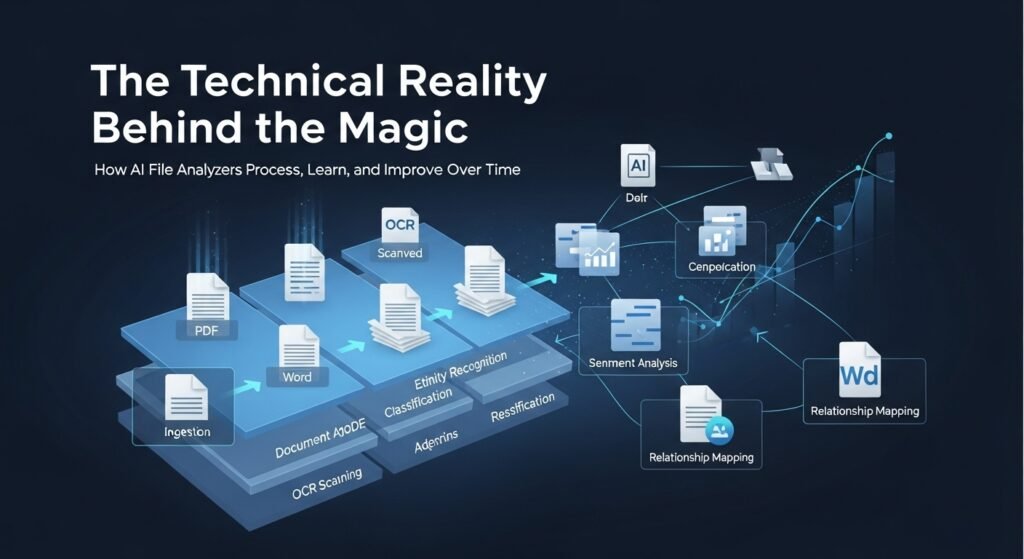
Understanding how these analyzers work helps set realistic expectations. The process typically starts with document ingestion, where the system accepts various file formats and converts them into analyzable data. OCR technology handles scanned documents, though accuracy depends significantly on scan quality. I’ve learned to always verify OCR results on critical documents, especially older ones with faded text.
The actual analysis happens through multiple layers. Entity recognition identifies people, organizations, dates, and locations. Sentiment analysis gauges tone and intent. Classification algorithms categorize documents automatically. Relationship mapping shows connections between different documents and entities. One fascinating aspect is how these systems improve over time.
Machine learning means the analyzer becomes more accurate with use, learning from corrections and understanding organization-specific terminology. A pharmaceutical company I worked with saw accuracy improvements of 30% within the first three months as their system learned industry-specific terminology and regulatory requirements.
Challenges and Limitations to Consider

Despite the impressive capabilities, AI file analyzers aren’t infallible. Language nuances, sarcasm, and cultural context can trip them up. I once witnessed an analyzer completely misinterpret a series of informal emails because it couldn’t grasp the team’s inside jokes and casual communication style.
Data privacy presents another significant consideration. These systems require access to potentially sensitive documents, raising questions about security and compliance. GDPR, HIPAA, and other regulations add layers of complexity. Organizations must carefully evaluate where data is processed and stored, especially with cloud-based solutions.
Cost remains a barrier for smaller organizations. While prices have dropped significantly, enterprise-grade solutions still require substantial investment, not just in software but in training and integration. However, I’ve seen creative solutions like shared services where multiple small firms pool resources to access these technologies.
Selecting and Implementing the Right Solution
Choosing an AI file analyzer requires careful evaluation of your specific needs. Volume matters less than you might think; complexity and variety of documents often present bigger challenges. A construction company dealing with blueprints, contracts, and safety reports needs different capabilities than a marketing agency analyzing campaign performance data.
Integration with existing systems proves critical. The best analyzer becomes useless if it doesn’t communicate with your current document management platform. API availability, export formats, and workflow compatibility should factor heavily in any decision. Training your team properly makes the difference between success and expensive failure.
I’ve seen organizations abandon powerful tools simply because users didn’t understand their capabilities or felt threatened by the technology. Clear communication about how AI augments rather than replaces human judgment helps significantly.
The Future Landscape
The trajectory of AI document analysis points toward even more sophisticated capabilities. Multi-language support continues improving, making global document analysis increasingly viable. Integration with other AI tools creates powerful ecosystems where document analysis feeds directly into decision-making systems.
What excites me most is the democratization happening in this space. Tools once exclusive to large enterprises are becoming accessible to small businesses and even individuals. This shift will fundamentally change how we interact with information.
FAQs
Q: How accurate are AI file analyzers?
A: Modern systems typically achieve 85-95% accuracy for standard document types, though specialized or poor-quality documents may see lower rates.
Q: Can AI analyzers handle handwritten documents?
A: Yes, though accuracy depends heavily on handwriting legibility. Most systems handle printed handwriting well, but struggle with cursive.
Q: What file formats work best?
A: Native digital formats (Word, PDF, Excel) provide the best results. Scanned documents work well ifthe resolution exceeds 300 DPI.
Q: How long does implementation take?
A: Basic setup takes days to weeks, but full integration and optimization typically requires 2-6 months, depending on complexity.
Q: Are cloud-based or on-premise solutions better?
A: Cloud solutions offer easier scaling and updates, but on-premise provides better control for sensitive data; choose based on your security requirements.

Related Posts