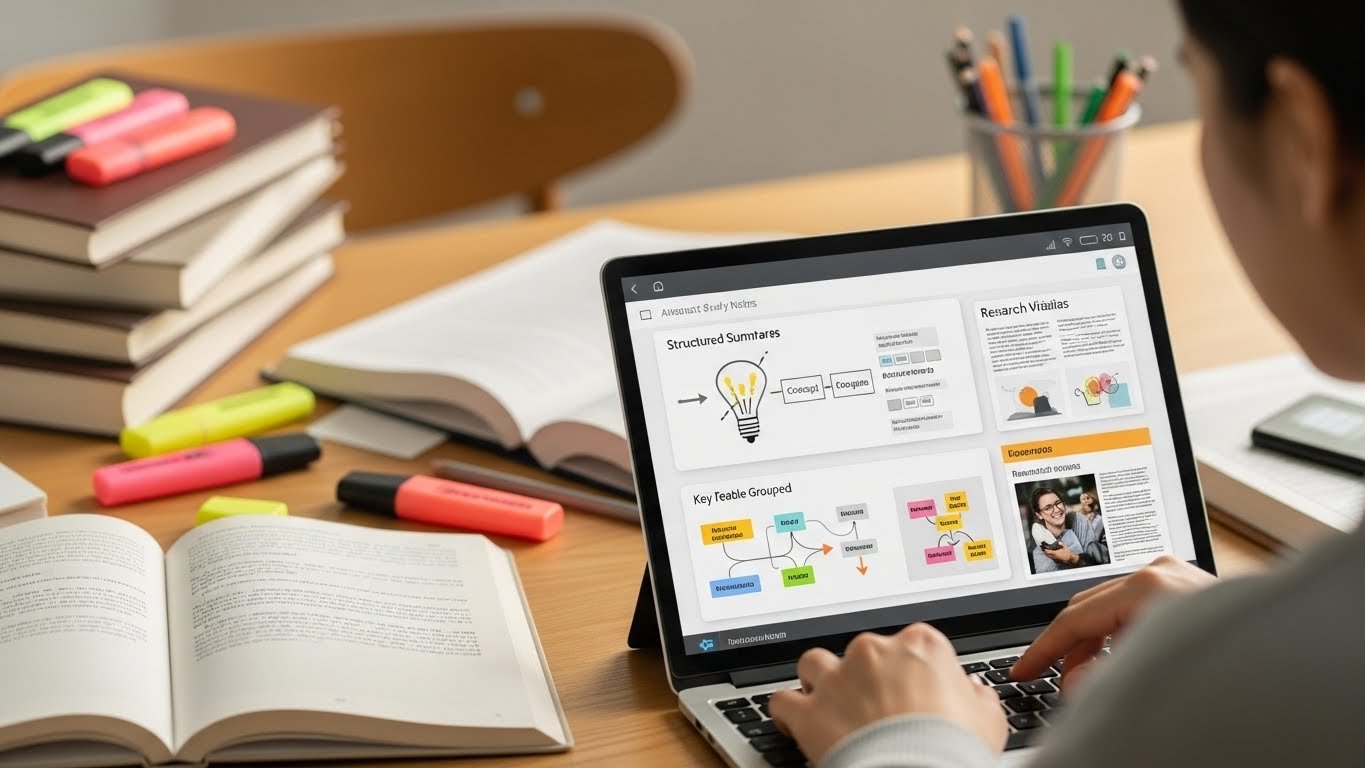

As someone who’s spent over a decade in education, first as a struggling college student cramming for finals, then as a tutor, and now as an educational technology consultant, I’ve watched exam preparation evolve from highlighters and sticky notes to something almost unrecognizable. By 2026, the landscape isn’t about replacing human effort with robots; it’s about augmenting our natural learning instincts with intelligent, responsive tools.
Having tested dozens of platforms over the past few years and spoken with students, educators, and developers, I can tell you this era isn’t about magic solutions. It’s about smarter, more personalized support systems that respect how real people actually learn. Here’s what the frontier looks like and what you need to know to use it wisely.
The Shift: From One-Size-Fits-All to Your Size
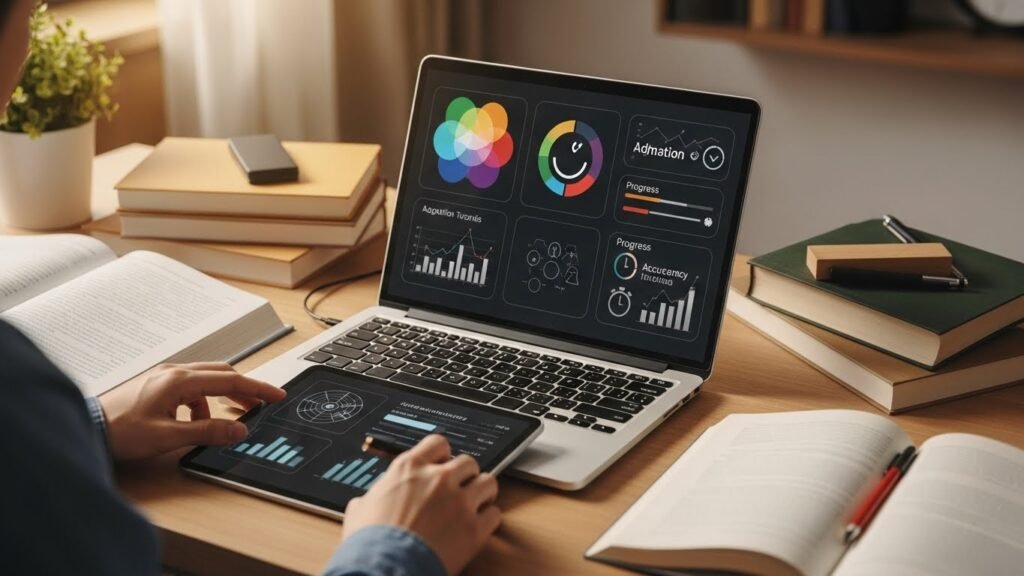
Remember when everyone used the same textbook, the same practice tests, and the same cram schedule? That model is fading fast. By 2026, the most effective AI-driven tools don’t just deliver content, they understand you. The core advancement? Deep personalization through cognitive profiling.
Imagine logging into a platform like CogniStudy (one of the leaders in 2026). Instead of a generic “Study for the MCAT” dashboard, it first asks you to complete a short, adaptive quiz not about the MCAT itself, but about how you think. It might mix math problems with verbal reasoning questions, tracking:
- Speed vs. Accuracy: Do you rush and make mistakes, or take time and miss the clock?
- Conceptual Leverage: When you get a chemistry question wrong, is it a formula gap, or a deeper misunderstanding of molecular bonds?
- Fatigue Patterns: Does your focus dip after 45 minutes?
Over a week, the system builds a learning fingerprint. Suddenly, your practice sessions aren’t random. If you’re a visual learner struggling with calculus integrals, it might generate short, color-coded animation tutorials instead of dense text. If you excel at memorization but falter under time pressure, it simulates exam conditions with gradually increasing speed requirements.
Real-Life Case: Maria, a pre-med student I mentored in early 2026, was stuck at a 510 MCAT score. CogniStudy identified that she had strong content knowledge but severe time management issues in the Critical Analysis section. Within six weeks, her section score jumped 12 points, lifting her total to 522 above her target school’s median. The tool didn’t teach her what to learn; it taught her how to apply it under pressure.
Adaptive Practice: When the Test Shapes Itself to You
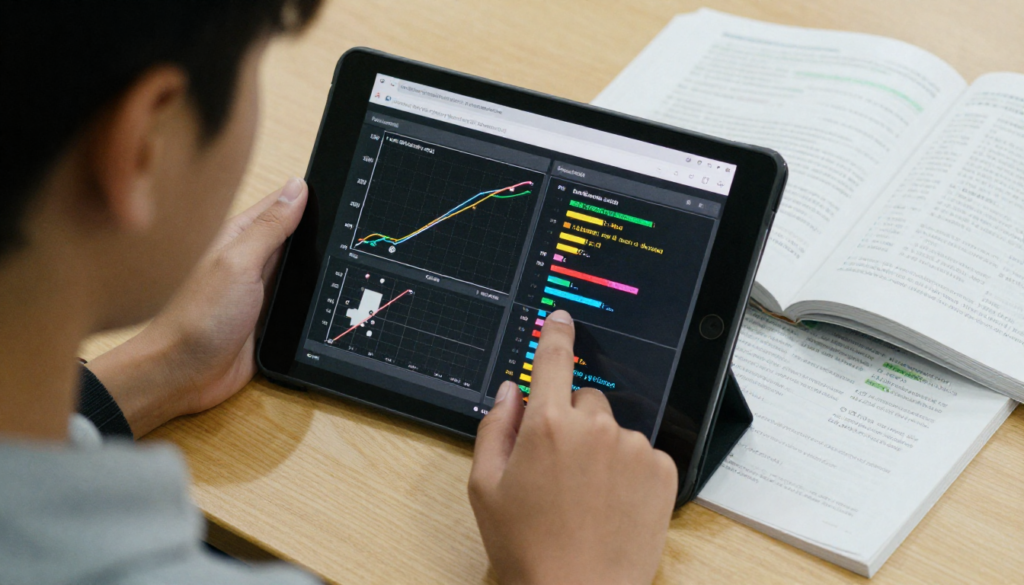
Gone are the days of doing 50 identical practice questions. Adaptive testing engines in 2026 act like a skilled tutor who knows exactly when to push you or pull back.
Take ExamForge Pro. You start a practice session for the GRE Quantitative Reasoning section. The first question is medium difficulty. Get it right? The next one gets harder. Miss it? The next one eases slightly. But it’s not just difficulty; it’s topic targeting. If you consistently stumble on data interpretation but ace geometry, ExamForge subtly shifts the mix: more tables and graphs, fewer triangles. It also tracks mistake patterns. Do you misread less than as greater than in inequalities? It flags that specific error type and generates extra drills.
Crucially, these tools provide actionable feedback, not just a score. Instead of Incorrect, you might see:
- “Common Trap: You assumed the percentage increase applied to the original value, but it was based on the discounted price. Review ‘Successive Percentage Changes’ (Link).”
This mirrors how human tutors work; they don’t just say wrong, they diagnose why. The result? Practice feels less like busywork and more like targeted skill-building.
Your 24/7 Study Companion: Conversational Tutors That Listen

One of the most transformative tools for 2026 isn’t a tool in the traditional senseit’s a conversational AI tutor. Think less “Siri,” more of that patient study group partner who never gets annoyed.
Platforms like AskEdvo use advanced natural language processing (far beyond 2025 tech) to engage in back-and-forth dialogue. Stuck on a physics concept at 10 PM? You don’t need to wait for office hours. Try this:
You: “I don’t get why kinetic energy is ½mv². Why half?”
AskEdvo: “Great question! It comes from the work-energy principle. Imagine pushing a box. The force you apply over a distance does work, which becomes kinetic energy. For constant acceleration (like from rest), the average velocity is half the final velocity. Since work = force × distance = mass × acceleration × distance, and distance = average velocity × time… [simplifies step-by-step]. Does that click?”
If you reply, “Still confused about average velocity,” it pivots:
AskEdvo: “Let’s visualize it. Picture a car speeding up from 0 to 10 m/s over 5 seconds. Its average speed isn’t 5 m/s (which would be if speed was constant), but actually 5 m/s only if acceleration was uniform. Wait maybe starting with a simple graph would help? [Generates a velocity-time graph].”
Why this works: Human learning thrives on dialogue. Studies from the 2025 Journal of Educational Technology showed students using conversational tutors for AP Calculus had a 23% higher retention rate than those using static videos. The AI doesn’t replace teachers; it fills the gaps when humans aren’t available.
The Body-Mind Connection: Wearables Meet Focus
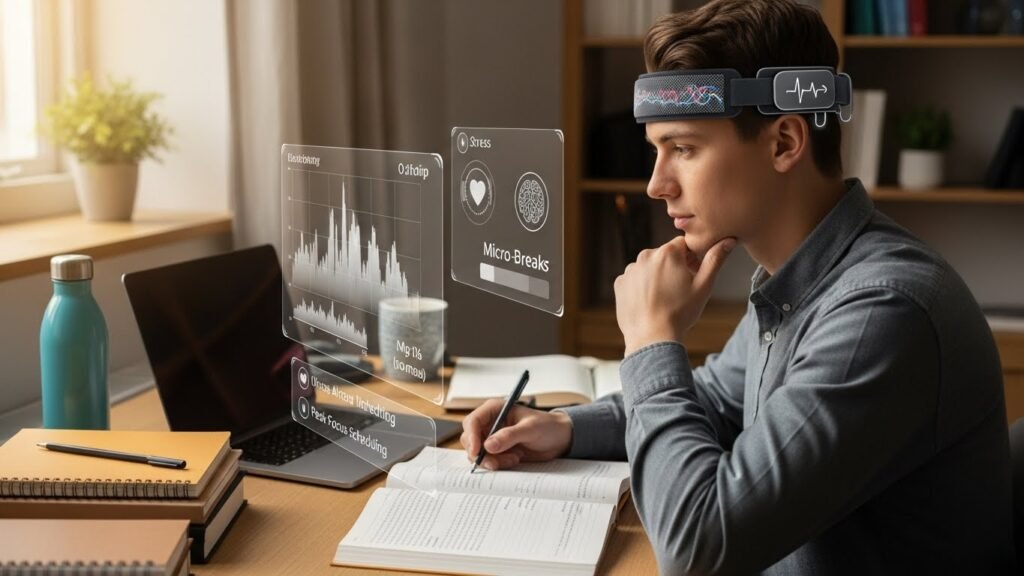
A surprising trend in 2026 is the integration of wearable technology with study apps. It’s not just about tracking steps, it’s about optimizing brain state.
Consider FocusBand, a sleek headband using EEG and heart-rate variability sensors. Pair it with your exam prep app:
- Stress Alerts: If your heart rate spikes during a tough practice set, FocusBand vibrates gently. The app then pauses the timer and suggests a 2-minute breathing exercise.
- Peak Focus Scheduling: Over two weeks, it learns you’re most alert between 9-11 AM. Your calendar automatically schedules tough subjects (organic chemistry), saving lighter review (vocabulary) for your post-lunch slump.
- Fatigue Prevention: If cognitive load is too high for 30 minutes straight, it triggers a micro-break with a quick game or stretch.
Ethical Note: This raises privacy questions. Reputable tools in 2026 adhere to strict data minimization policies; your biometrics stay on your device, never sold. Always check for the Global EdTech Trust Seal (introduced in 2025 after high-profile data scandals).
The Flip Side: When Tech Isn’t the Answer

Despite the dazzle, I’ve seen students burn out by over-relying on these tools. Here’s where caution is vital:
- The “Illusion of Mastery” Trap: Passing an adaptive quiz feels great, but it’s not the same as explaining a concept aloud or teaching it to someone else. A 2025 Stanford study found that students overestimating their knowledge after AI practice scored 15% lower on open-response exam questions. Solution: Always pair digital drills with verbalization. Record yourself explaining a solution without notes.
- Equity Gaps Persist: Not all schools can afford institution-wide licenses for premium tools. While many basic versions are free, the most advanced features (like full conversational tutors) often require subscriptions ($15-$30/month). Initiatives like StudyForAll (a nonprofit offering subsidized access in 40+ countries by 2026) are helping, but disparities remain.
- Critical Thinking Can’t Be Automated: Tools excel at reinforcing facts and patterns, but complex analysis like debating ethical implications in a philosophy exam still demands human reasoning. Use AI for the grind; reserve your highest cognitive energy for deep synthesis.
The Road Ahead: What’s Next After 2026?

We’re approaching a tipping point. By late 2026, early prototypes of neuro-adaptive interfaces are in testingto ols that adjust content in real-time based on blood flow in the prefrontal cortex (measured non-invasively). Could this lead to “Google Search” for your own brain? Possibly. But the core principle should stay: Technology serves the learner, not the other way around.
The future belongs to hybrid models. Think of it like a sports team: the AI is your advanced analytics system, but you’re still the player making the final shot. The most successful students in 2026 aren’t those with the fanciest tools, but those who know when to listen to the tech, when to question it, and when to trust their own instincts.
Final Thoughts
After years in the trenches of education tech, my advice is simple: Use these 2026 tools to remove friction, not replace effort. They’re incredibly powerful for mastering fundamentals, identifying weak spots, and building efficient habits. But treat them like a skilled co-pilot, not the pilot. Your curiosity, discipline, and willingness to struggle are still the engine driving real mastery.
The best exam prep in 2026 isn’t about the AI. It’s about you, empowered by tools that finally speak your language.
FAQs
1. Are these AI tools expensive?
Many offer robust free tiers for core features (basic adaptive quizzes, limited tutor chats). Premium plans ($15-$30/month) unlock advanced personalization, full conversational tutoring, and wearable integration. Check for school discounts or nonprofit programs like StudyForAll.
2. Can AI tools replace human teachers?
No. They excel at personalized practice and instant feedback but lack the empathy, contextual understanding, and motivational skills of a human educator. Use them to supplement, not substitute, teaching.
3. How do I avoid data privacy risks?
Choose tools with transparent policies and the Global EdTech Trust Seal. Enable local data processing on wearables (so biometrics stay on your device). Never share sensitive personal identifiers unnecessarily.
4. Will these tools work for all subjects?
They’re strongest in structured fields like math, science, and standardized tests. For essay-heavy humanities, they aid research and grammar checks but can’t craft original arguments for you.
5. What if the AI gives wrong answers?
Reputable platforms have multi-layer verification (human educators review flagged answers). Always cross-check critical information with textbooks or teachers. Treat AI responses as a starting point, not gospel.

Related Posts