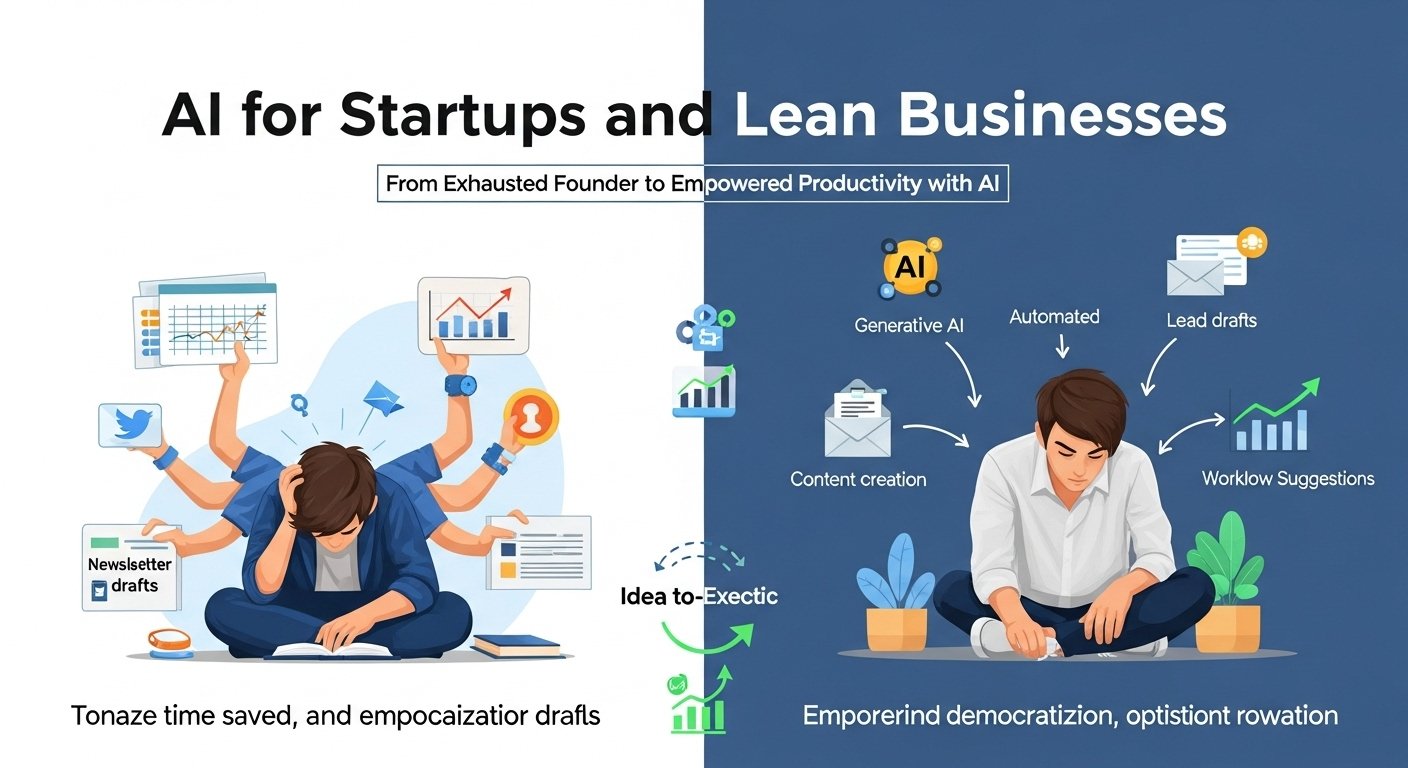
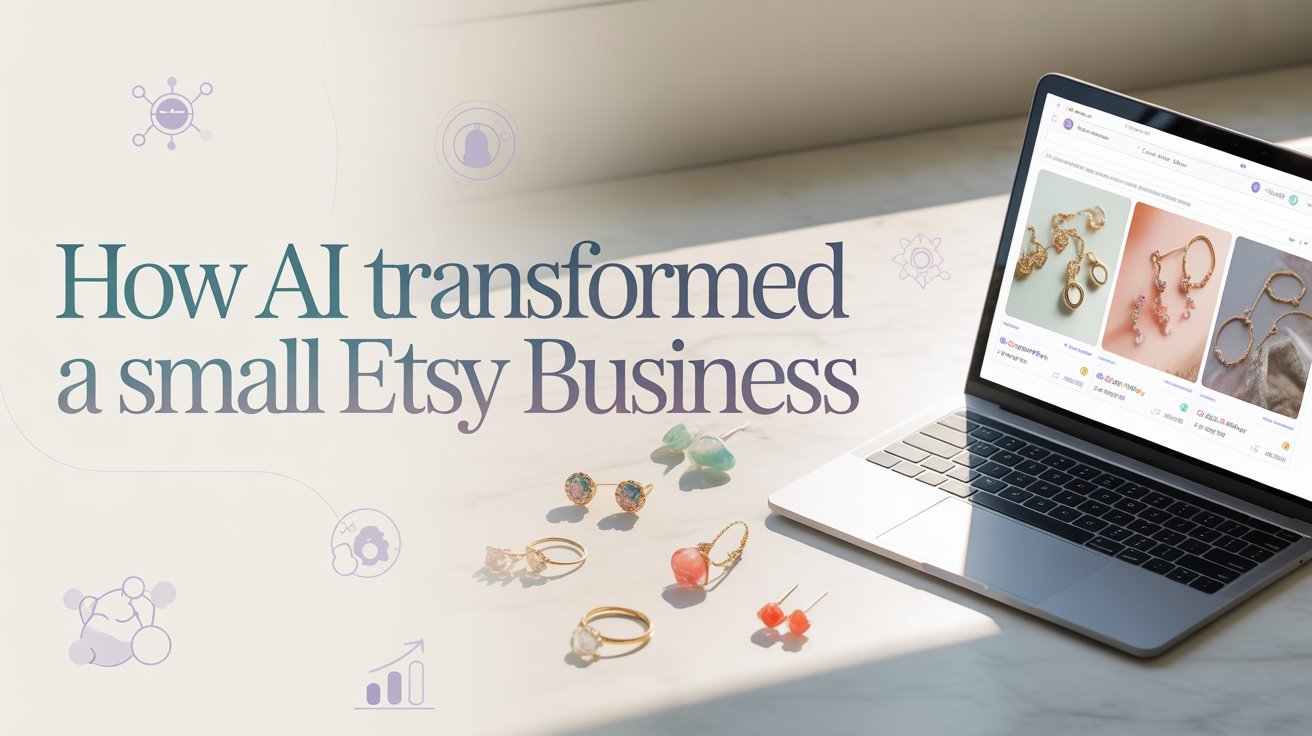
Back in 2022, I was consulting with Lila, a small Etsy shop owner who sold hand-stamped metal jewelry. She was incredibly talented at her craft, but she was on the brink of shutting down her business. Between spending 3 hours a day responding to customer questions, 4 hours struggling to write Instagram captions and product descriptions, and every Sunday panicking about whether she had enough inventory for the week, she had no time left to actually make jewelry.
I suggested she test a few affordable AI tools, and within three months, her workload dropped by 60%, and her monthly revenue jumped 45%. That’s when I fully realized: AI isn’t just a buzzword for big tech corporations. It’s a game-changer for every online business, no matter the size.
Today, there are AI tools designed to solve nearly every pain pointthat online business owners face. From automating customer service to optimizing marketing campaigns, these tools free up time to focus on what matters most: growing your brand and connecting with your core audience.
Streamlining Customer Service Around the Clock
One of the biggest drains on an online business owner’s time is customer support. Most shoppers expect answers to their questions within hours, if not minutes, and missing a query can mean losing a sale. This is where AI chatbots have evolved beyond their clunky early versions. Modern AI chatbots like Intercom Fin and Zendesk AI, or even Shopify’s built-in AI chatbot, can understand context, resolve common issues, and even recommend products without human intervention.
For Lila, setting up a Shopify chatbot was a revelation. The bot was trained to answer questions about shipping times, custom order requests, and return policies 24/7. It could even suggest a matching bracelet when a customer asks about a necklace. She used to miss 15-20 sales a week while she slept; that number dropped to zero within a month.
Of course, chatbots aren’t perfect. I’ve seen clients whose bots gave out incorrect information because they weren’t properly trained on brand-specific details. The best approach is to let AI handle routine queries, but always give customers an option to transfer to a human for complex issues.
Creating High-Quality Content Without the Burnout
Consistent content is critical for online business success, whether it’s product descriptions, blog posts, social media captions, or email newsletters. But not every business owner is a natural writer, and hiring a freelance writer can be prohibitively expensive. AI content tools like Jasper, Copy.ai, and GPT-4o have made this accessible to everyone.
A friend of mine who runs a sustainable home goods store used to pay a freelance writer (50 per product description, and it would take a week to list 10 new items. Now, he uses Shopify Magic to generate tailored descriptions, then spends 2-3 minutes editing each one to match his brand’s warm, eco-conscious voice. He cut his content costs by 80% and was able to list 100 new products in a single week.
AI is also a game-changer for visual content. Tools like DALL-E 3 and Midjourney can generate product mockups, social media graphics, and even lifestyle photos for a fraction of the cost of a professional photoshoot. I recently helped a skincare brand generate 20 unique mockups of their new serum in different bathroom settings, all for less than 10. The key here is to never let AI content go live without a human edit. Generic AI content will fail to connect with your audience.
Boosting Marketing and SEO Results
For online businesses, being visible to your target audience is non-negotiable. AI tools have leveled the playing field, allowing small businesses to compete with big brands in terms of SEO and ad performance. Tools like Ahrefs AI and SEMrush AI can analyze your competitors’ content, identify keyword gaps, and even outline blog posts that are optimized to rank on Google. Last year, I worked with a client in the budget fitness equipment niche who wanted to rank for the best budget resistance bands.
Ahrefs AI not only suggested 20 long-tail keywords we could target, but it also compared the top-ranking articles and told us exactly what information was missing from their content. Within six months, their blog post was on the first page of Google, driving 1,200 new organic visitors to their store every month.
AI also revolutionizes ad optimization. Meta’s AI ad tools and Google Ads Performance Max use real-time data to adjust your ad targeting, bids, and creative to maximize ROI. A dropshipping client of mine used Meta’s AI to refine their target audience, and their ad ROI increased by 32% in just two months.
Optimizing Inventory and Operations
Inventory management is a silent killer for e-commerce businesses. Overstock ties up your cash flow, while understock means missing out on sales. AI forecasting tools like TradeGecko and Shopify’s Inventory Planner analyze your past sales data, seasonal trends, social media engagement, and even industry-wide market data to predict demand.
After using Shopify’s AI inventory tool, Lila was able to cut her unsold holiday inventory from 25% to just 7% last year. The tool noticed that her personalized Christmas jewelry sold best in the two weeks before December 15, and recommended she ramp up production in late November, rather than early October, as she had done in the past.
The Fine Print: AI Limitations and Ethics
While AI tools are incredibly powerful, they are not a replacement for human expertise. AI hallucinations, where the tool generates false information, are still a common issue. I once had a client whose AI chatbot gave a customer the wrong return address because it made up a location that didn’t exist. This is why it’s critical to audit your AI tools regularly and have human oversight.
There are also ethical considerations to keep in mind. Using AI to scrape competitor content, generate images that infringe on copyright, or write fake customer reviews can damage your brand’s reputation and even lead to legal trouble. Finally, some customers will always prefer to speak to a human, so it’s important to balance AI automation with personal touchpoints.
Final Thoughts
AI tools are not just for tech giants or million-dollar e-commerce stores. They are for the side hustler selling on Etsy, the solopreneur running a subscription box service, and the small business owner trying to expand their reach. The key to success is to identify the tasks that are eating up most of your time the repetitive, administrative work – and use AI to automate those. This frees you up to focus on what only you can do: create unique products, build relationships with your customers, and shape your brand’s identity.
FAQs
Q: Do I need a big budget to use AI tools for my online business?
A: No. Many AI tools offer free plans or affordable monthly subscriptions (starting at $10-$20/month) that are perfect for small businesses. Shopify Magic and Meta’s AI ad tools are even included with existing platform subscriptions.
Q: Can AI replace human employees in an online business?
A: Unlikely. AI works best as a tool to support human employees, not replace them. It automates repetitive tasks, so your team can focus on high-value work like customer relationship building and creative problem-solving.
Q: How do I avoid generic AI content that doesn’t match my brand?
A: Always train AI tools on your existing brand content, and edit every piece of AI-generated content to add your unique voice. You can also create a brand style guide and feed it to the AI for reference.
Q: Are there any risks to using AI tools for customer data?
A: Only if you choose untrustworthy tools. Always use AI tools that are GDPR and CCPA compliant, and never share sensitive customer data with tools that do not have strong privacy policies.
Q: Which AI tool should I start with if I’m new to this?
A: Start small. If you run an e-commerce store, begin with Shopify Magic for product descriptions and the built-in AI chatbot. If content marketing is your focus, try ChatGPT for brainstorming and Jasper for content writing.

Related Posts