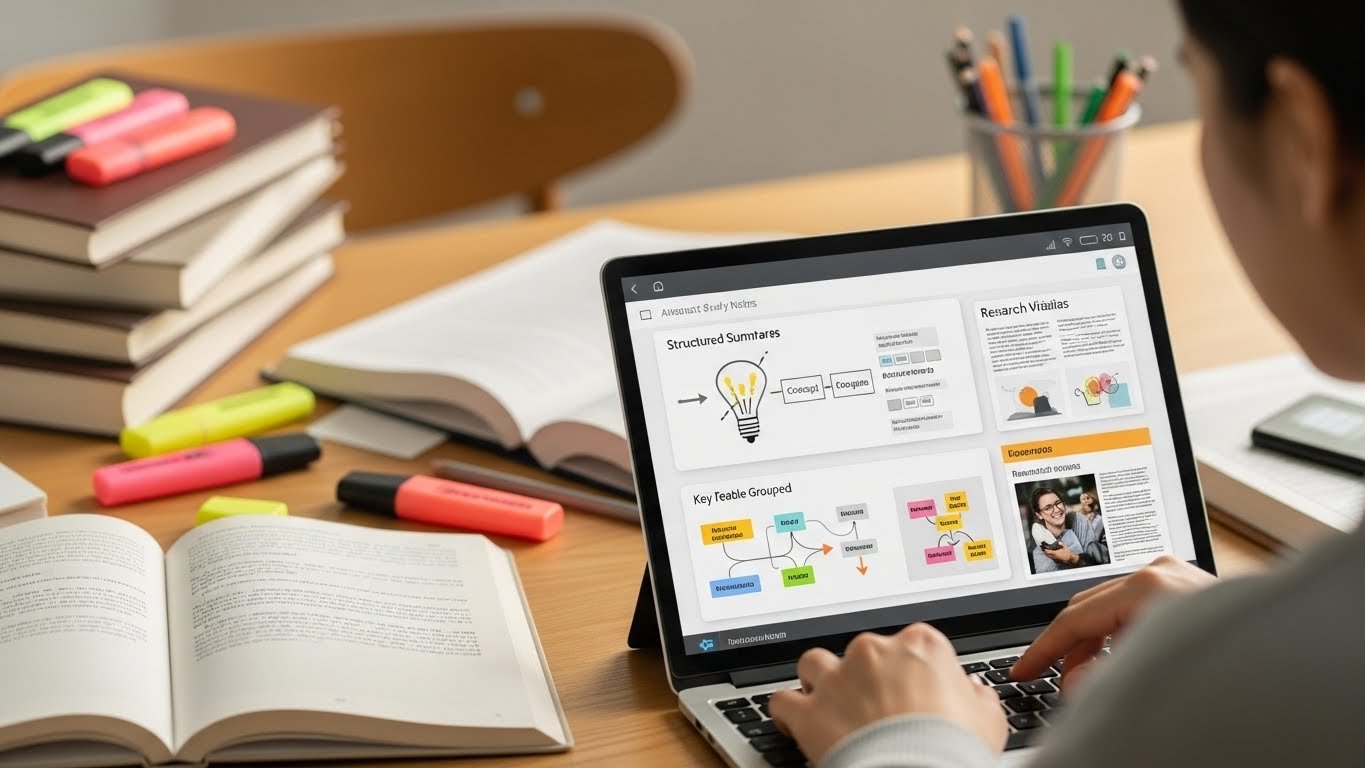

I’ve spent the better part of a decade working with students, from overwhelmed freshmen cramming for their first biology final to law students wrestling with mountains of case law. The story is often the same: a mountain of material, a ticking clock, and a growing sense of panic. The traditional toolkit, highlighters, flashcards, and study groups, is tried and true, but it feels increasingly inadequate against the sheer volume of information we’re expected to master today.
Then, everything changed. Over the last couple of years, I’ve watched a new kind of assistant quietly enter the scene. It’s not a human tutor, though it can act like one. It’s an AI-powered study buddy, and it’s fundamentally reshaping the art and science of exam preparation. This isn’t about futuristic robots taking over; it’s about using incredibly smart tools to work smarter.
Your Personal Tutor, Available 24/7

Let’s start with the most profound shift: on-demand, personalized tutoring. Remember being stuck on a single concept, a tricky statistical formula, a convoluted philosophical argument at 10 PM the night before an exam? Your professor is asleep, your friends are busy, and you’re on your own. Today, a student can turn to an AI learning assistant.
I’ve seen it firsthand. A student I was tutoring was struggling with the concept of oxidative phosphorylation. Instead of just re-reading the textbook, she input a simple prompt into an AI tool: “Explain oxidative phosphorylation to me like I’m a first-year college student, and use an analogy.”The response wasn’t just a block of text.
Taming the Information Tsunami

If there’s one thing modern education excels at, it’s assigning reading. Dense academic papers, sprawling textbook chapters, hours of lecture recordings. It’s too much. This is where AI tools become a superpower for efficiency, not by replacing the reading, but by enhancing it. AI-powered summarizers are a prime example. You can feed it a 30-page research article on, say, the impact of social media on adolescent mental health.
You can identify the key sections to focus on, saving hours of sifting through less relevant material. Beyond summarizing, these tools can automate the grunt work of studying. I advise students to take their lecture notes and use an AI to generate a set of flashcards or practice multiple-choice questions. The AI can identify key terms and concepts from the text and turn them into interactive study materials.
The Strategist’s Edge: Planning and Writing

Studying isn’t just about absorbing facts; it’s about strategy. When do you start? What do you cover each day? How do you structure an essay answer under pressure? AI is stepping in here as well. AI-driven study planners can analyze your syllabus, your exam dates, and your available study time to generate a personalized schedule. It can space out topics in a way that promotes long-term retention, a technique known as spaced repetition.
It’s like having a personal academic coach who maps out the entire game plan for you, ensuring you cover everything without last-minute panic. For essay-based exams, AI writing coaches are becoming invaluable. I’m not talking about tools that write the essay for you; that’s a dangerous ethical line we’ll get to. I’m talking about tools that act as a critical eye. You can paste a practice essay prompt and ask the AI to review your response for clarity, structure, and logical flow.
The Crucial Caveat: Using AI Responsibly

Now, let’s be real. No tool is a magic bullet, and this one comes with significant responsibilities. The first thing I tell every student is this: The AI can be wrong. These models are trained on vast datasets, but they can “hallucinate” facts, misinterpret context, or provide outdated information. Every single piece of information it gives you, especially for a STEM or history exam, must be cross-referenced with your textbook or lecture notes.
The second, and perhaps more important, danger is over-reliance. Think of it like a calculator. A calculator is an essential tool for complex math, but if you use it for simple addition, you let your own basic arithmetic skills atrophy. If you let the AI do all your summarizing, all your question-creation, and all your critical thinking, you are not building the neural pathways required for true understanding.
Finally, academic integrity. Using AI to generate an essay you submit as your own is plagiarism, full stop. The ethical line is drawn at generation versus assistance. Use it as a brainstorming partner, a summarizer, a practice quiz generator, and a structural editor. But the core ideas, the analysis, and the final words must be yours.
The future of exam preparation isn’t about humans versus machines. It’s about a powerful partnership. By leveraging AI as a patient tutor, an efficient research assistant, and a strategic coach, students can navigate the complexities of modern education with a new level of confidence and control.
FAQs
Q. Are AI study tools considered cheating?
A. It depends on how you use them. Using them to generate an assignment or answers for a test is cheating. However, using them as personal tutors for explanations, to create practice quizzes, or to summarize your own notes is generally considered a legitimate study aid, similar to using a study group or a textbook.
Q. Do AI study tools actually improve grades?
A. They can, but they aren’t a substitute for learning. Students who use them strategically to clarify concepts, plan their study time, and get more practice often see improvements. The tools enhance efficiency and understanding, which can lead to better performance, but the student still has to do the work of learning.
Q. What’s the best AI tool for studying?
A. There’s no single best tool. The right one depends on your needs. For STEM problems, a tool with strong step-by-step math capabilities is key. For humanities, a summarizer and writing coach might be more useful. Many platforms now integrate multiple functions, so it’s worth trying a few to see what fits your learning style and subject.
Q. Are these tools expensive?
A. Not necessarily. Many powerful AI tools have robust free versions that are perfectly adequate for studying. Paid versions often offer more features, higher usage limits, or access to more advanced models, but most students can get started and see significant benefits without spending any money.

Related Posts