


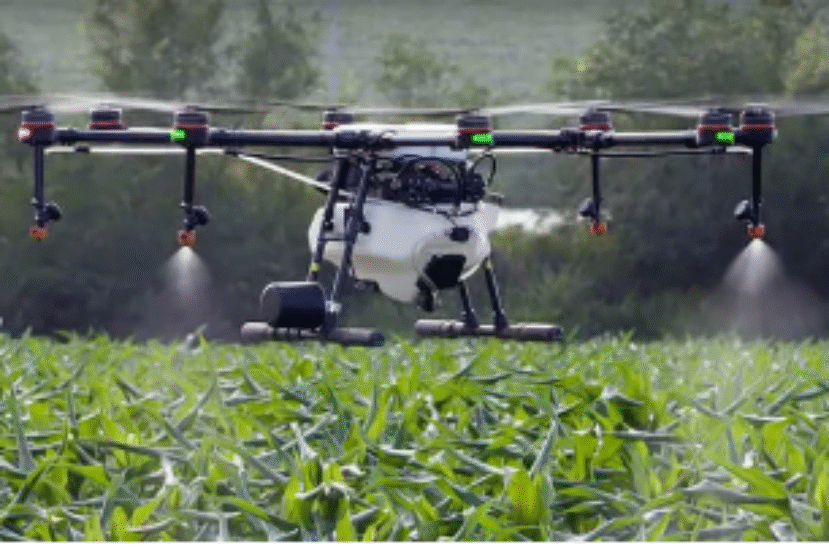
For centuries, farming has been a dance with nature, a constant pursuit of efficiency and yield against unpredictable elements. From the manual scattering of seeds to the advent of tractors and widespread ground-based sprayers, agriculture has continuously evolved. Today, we stand on the cusp of another revolution, one that’s taking farming to the skies: agriculture drone spraying.
Imagine vast fields stretching to the horizon, not a farmer in sight, yet crops are being meticulously nurtured. This isn’t science fiction; it’s the reality unfolding across farms worldwide as Unmanned Aerial Vehicles (UAVs) become indispensable tools for crop protection and nutrient application.
What Exactly Is Agriculture Drone Spraying?
At its core, agriculture drone spraying involves equipping professional-grade drones with precision spraying systems. These aren’t your hobbyist drones; they are robust machines designed to carry significant payloads of liquids like pesticides, herbicides, fungicides, or even liquid fertilizers.
What makes them truly revolutionary is their integration with advanced technologies:
GPS and RTK (Real-Time Kinematic) systems: For centimeter-level accuracy in navigation and application.
Lidar and radar sensors: To maintain optimal height above crops and avoid obstacles.
AI-powered mapping and analytics software: To identify specific problem areas, delineate spray zones, and manage flight paths.
Variable Rate Technology (VRT): Enabling the drone to adjust spray volume and concentration based on real-time data or pre-programmed maps, ensuring every plant gets exactly what it needs.
The Unparalleled Advantages: Why Drones Are Game-Changers
The adoption of drone spraying isn’t just a novelty; it’s driven by a compelling suite of benefits that address some of modern agriculture’s biggest challenges.
Pinpoint Precision and Unmatched Efficiency: Traditional spraying often involves a “broad stroke” approach, applying chemicals uniformly across an entire field. Drones, however, offer a “surgical strike.” Thanks to GPS mapping and VRT, they can target specific areas or even individual plants affected by pests or disease. This precision dramatically reduces the amount of chemical inputs needed, leading to significant cost savings for farmers and less waste. The result? Optimized crop health and increased yield potential.
Enhanced Safety for Farmers and Laborers: Handling and applying agricultural chemicals can be hazardous. Farmers and workers are exposed to potentially harmful substances, often in challenging conditions. Drone spraying removes humans from the immediate vicinity of chemical application, drastically reducing the risk of exposure, accidents, and long-term health issues. This is a monumental step forward for occupational safety in agriculture.
Speed, Labor Savings, and Timely Intervention: Drones can cover vast areas much faster than manual labor and often quicker than traditional ground vehicles, especially in wet conditions where heavy machinery can get bogged down. One operator can manage multiple drones, freeing up valuable human capital for other essential farm tasks. Furthermore, the speed of drone application means farmers can react swiftly to outbreaks of pests or diseases, preventing widespread damage before it takes hold.
Environmental Stewardship: The precision of drone spraying has profound environmental benefits. By reducing the overall volume of pesticides and herbicides used, we minimize chemical runoff into waterways and soil. This protects local ecosystems, biodiversity, and can contribute to healthier soil microbiomes. Less chemical usage also means a smaller carbon footprint associated with manufacturing and transporting these inputs.
Access to Difficult Terrain and Dense Canopies: Ground-based sprayers struggle with uneven terrain, steep slopes, muddy fields, or crops in advanced stages of growth with dense canopies. Drones, being airborne, can effortlessly navigate these challenging environments. They can fly over obstacles, treat crops on hillsides, and penetrate thick foliage to deliver treatments directly where they’re needed, ensuring no part of the field is left untreated.
Data-Driven Decisions and Proactive Management: Beyond spraying, many agricultural drones are equipped with multispectral cameras and sensors. Before or after a spray mission, these drones can collect invaluable data on crop health, growth patterns, and stress levels. This data can be analyzed by AI software to create highly detailed maps, allowing farmers to make informed, proactive decisions about water, nutrient, and pest management for future cycles.
Navigating the Challenges
While the benefits are compelling, the integration of drone spraying isn’t without its hurdles:
Initial Investment: The cost of professional-grade drones and associated technology can be a significant upfront expense for many farmers.
Regulatory Landscape: Airspace regulations, licensing requirements, and operational permits vary by region and can be complex to navigate.
Skill and Training: Operating these sophisticated machines requires specialized training in drone piloting, software operation, and chemical application protocols.
Battery Life and Payload Limitations: While improving rapidly, battery life and the weight drones can carry still dictate the continuous operational time and the size of fields they can efficiently cover in a single flight.
Weather Dependency: High winds or heavy rain can ground drones, just like traditional aircraft, limiting their operational windows.
The Future is Flying High
Despite the challenges, the trajectory of agriculture drone spraying is undeniably upward. We can anticipate even greater autonomy, enhanced AI integration for real-time problem detection and decision-making, and the development of swarms of drones working collaboratively. Drones are not just a tool; they are becoming an integral part of a holistic smart farming ecosystem, working alongside IoT sensors, satellite imagery, and advanced analytics to create more productive, sustainable, and resilient agricultural practices.
As the world’s population grows and the demand for food increases, technologies like drone spraying will be crucial in helping farmers cultivate more with less. It’s an exciting time to witness “smart farming” truly take flight, promising a future where efficiency, safety, and environmental stewardship go hand-in-hand in feeding our planet.



Leave a comment